
After the 2025-2026 butternut crop was harvested, the Regenerative treatment received Omya Calciprills (150 kg/ha), Sulphur (30 kg/ha), Boron (10 kg/ha), and Humates (5 kg/ha). This mix has been applied annually to stimulate soil microbes for good soil health. Thanks to Websters Hydrated Lime for supplying the micronutrients again.
All three treatments were then disced twice. Since the ground was so hard and dry, the first pass with the discs was quite blocky, but after the second pass, there were plenty of fines for a seedbed.
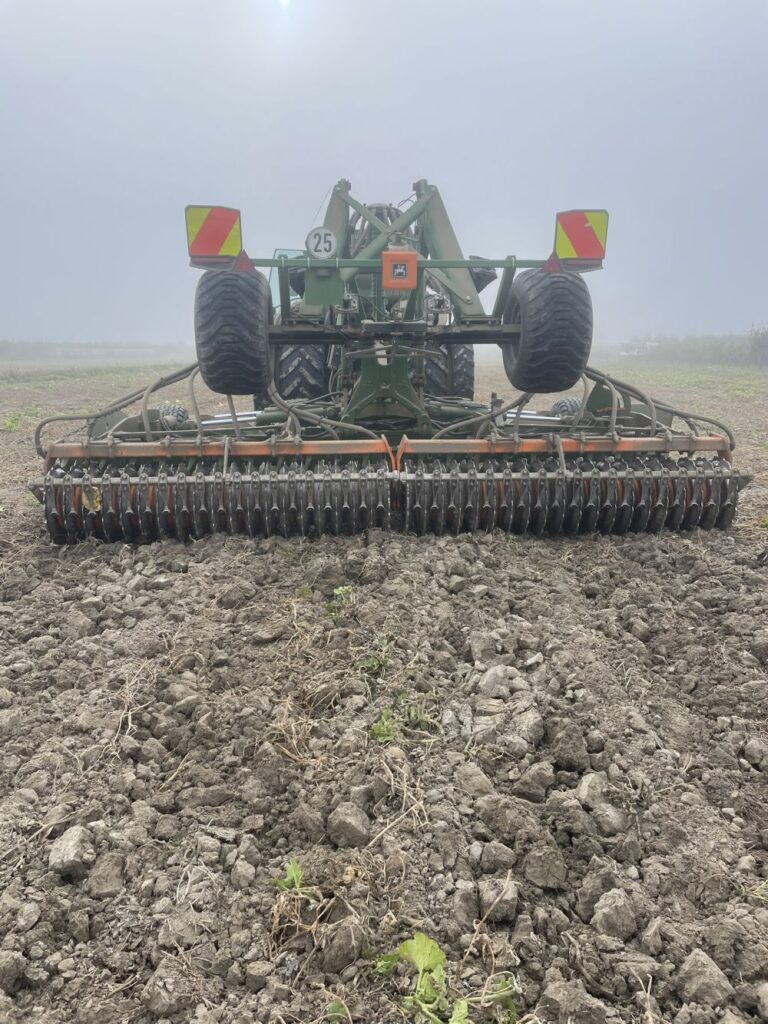
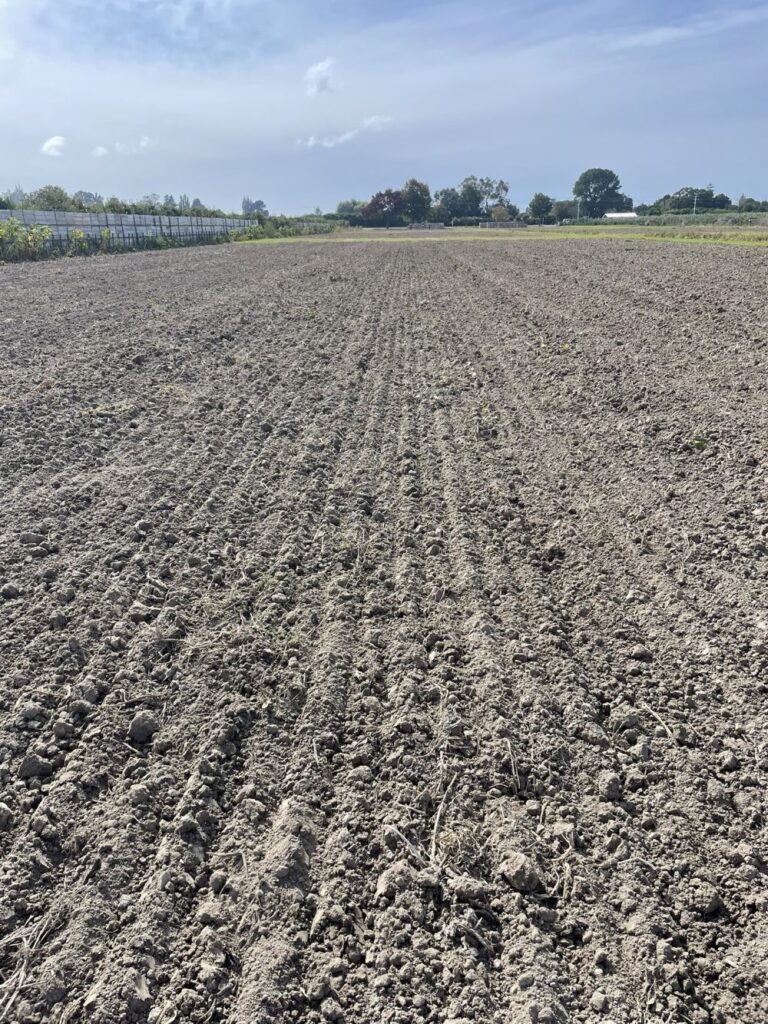
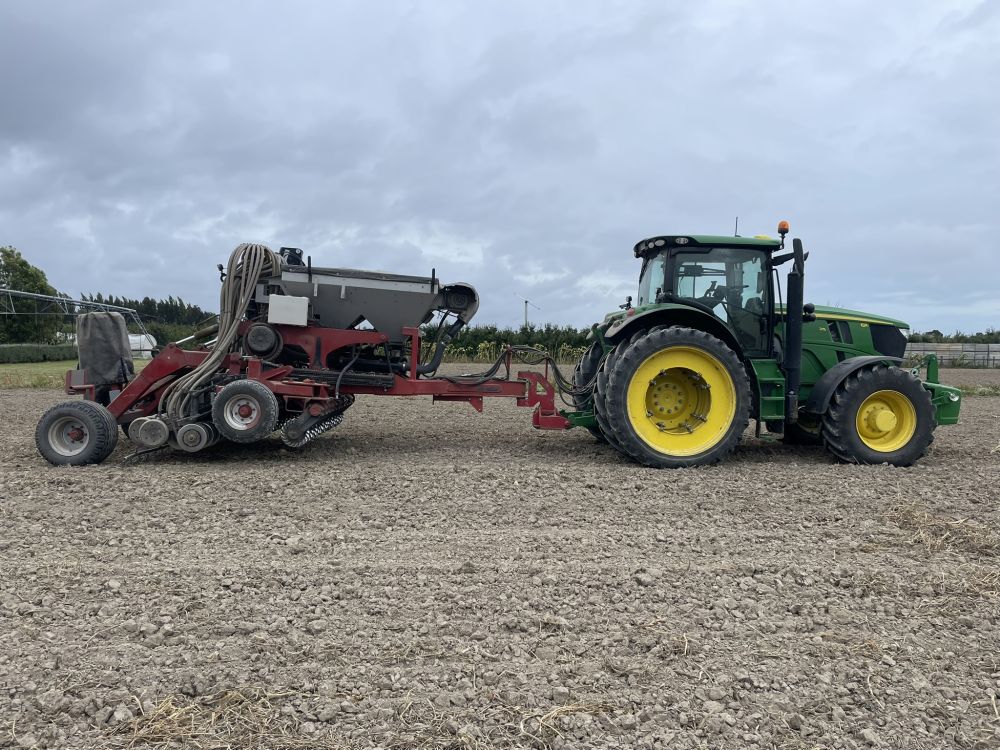
The Conventional and Hybrid treatments were both planted with Moata ryegrass (25 kg/ha). The Regenerative treatment was planted with triticale (80 kg/ha) and vetch (50 kg/ha). Butternut residue made drilling tricky as long “ropes” of dried vine blocked equipment. The hard, dry, rubbly surface in areas such as wheel tracks left seed above the ideal soil mix. Normally we would aerate as the last autumn operation, leaving the soil fractured over winter and spring. We think the butternut residue will make that extremely difficult, so have postponed it. If the soil is still dry enough once residues have rotted, we can aerate in a couple of months.
Thank you to Mike Kettle Contracting for doing our groundwork and planting our cover crops.
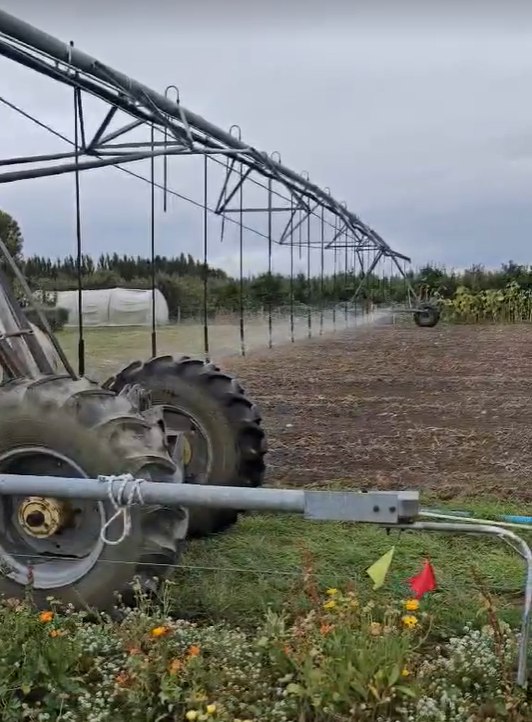
Because the soil is so dry, and with no rain on the Hawke’s Bay horizon, we are applying 12 mm of irrigation to ensure good establishment. Once complete, we plan to apply bait as our slug populations are extremely high and past experience showed they have major effects on cover crops, especially the vetch we have planted.
A big thank you to all the Operation Advisory Group members who have attended our weekly field walks and helped make decisions for our cover crops.
Carbon Positive is a partnership between LandWISE, the HB Future Farming Trust, McCain Foods, Heinz-Wattie’s and Process Vegetables NZ.
