Skip to content
Menu
LandWISE – Promoting sustainable land management
  • Welcome
    • About
    • LandWISE Committee and Staff
    • Contact
  • Projects
    • Carbon Positive
      • Carbon Positive Reports
    • Nitrachek: Farmer Friendly Nitrate Testing
    • SLAKES: a cost-effective measure of soil structural stability
    • Soil Repair after Cyclone Gabrielle
    • Vegetable Production Nitrogen Management
    • Best Management of Nitrates in Process Cropping
    • Future Proofing Vegetable Production
    • Herbicide Resistance Management
  • Events
    • Soil Health for Profit
      • Soil Health for Profit Presenters
    • Cyclone Gabrielle Research Symposium
      • Historical North Island Flood Events
      • An extraordinary storm: the severity of Cyclone Gabrielle’s weather in Hawke’s Bay
      • The Science Response in the Year of Storms; A Gisborne/Tairawhiti perspective
      • Insights into causes of landslides triggered by Cyclone Gabrielle
      • The effects of Cyclone Gabrielle on fruit tree health in Hawke’s Bay
      • Impact of Cyclone Gabrielle on stonefruit orchards in Hawke’s Bay: a case study
      • Charting the Course following Cyclone Gabrielle
      • Baseline sediment sampling in Tairawhiti and Hawke’s Bay
      • Impacts on cropping businesses
      • Understanding the flooding caused by Cyclone Gabrielle
      • Building Flood Damage from Ex-Tropical Cyclone Gabrielle
      • Food safety and critical incidents: A unified approach for safer produce
      • Silt nutritional status and contamination concerns
      • Lessons from the horticultural sector response to Cyclone Gabrielle
      • Ecological impacts of Cyclone Gabrielle
      • Cyclone Gabrielle and Poplar Windthrow in Northland
      • Seed Size and Establishment Method Determine Crop Recovery Following Cyclone-Induced Silt Deposition
      • Returning to (some) baseline sampling sites to assess cropping soil recovery
      • Recovery of annual cropping ground – Grower learnings
      • Recovery of Annual Cropping over 2 Years
      • Technical and extension learnings from Cyclone Gabrielle
    • Getting to Carbon Positive!
      • Getting to Carbon Positive – Presenters
    • Rebuilding Our Soils
      • Rebuilding Our Soils – Presenters
    • Events Archive
  • Tools
    • Fertiliser Application Equipment Calibration
      • Fertspread Spreader Calibration
      • Fertspread Placement Calibration
    • Nitrachek Calculator
    • Irrigation Evaluation – IRRIG8
      • IRRIG8: Centre Pivot
        • IRRIG8-online: Centre Pivot User Guide
      • IRRIG8: Linear Move
      • IRRIG8: Travelling Irrigator
        • IRRIG8-online: Travelling Irrigation User Guide
      • IRRIG8: Multiple sprayline calculator
      • IRRIG8: Solid set irrigation
      • IRRIG8: Pressure and energy
        • Pressure and Energy Calculator: User Guide
    • Soil Infiltration Calculator
      • Disc Permeameter User Guide
      • Disc Permeameter Calculator: Frequently Asked Questions
    • Carbon Calculator
    • ANOVA Tool for statistical significance
  • Blog
  • Sign Up
  • Login
  • Members Only
    • Online Learning
  • Account
  • Site Search
LandWISE – Promoting sustainable land management

Cover Crop Update

Posted on October 10, 2024

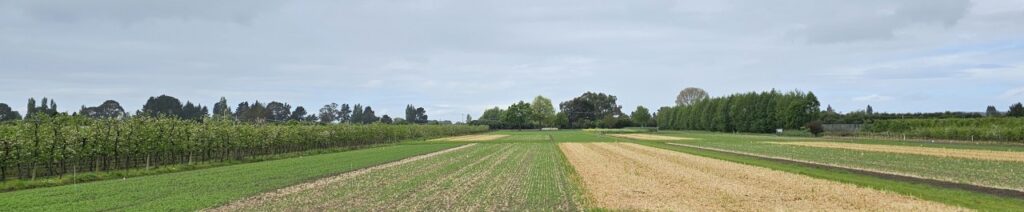
In the above picture, you can see our McCain Foods pea crop planted into cultivated (Conventional treatment) soil on the left, and into sprayed our mixed cover crop (Hybrid treatment) in the centre. The golden patch is mixed cover crop residue in the Regenerative treatment plot that was mulched on 1 October. Some of the oats, tillage radish and other species remain alive under the mulch.

To completely terminate the cover prior to planting green beans in December, the Operations Advisory Group has decided to run disks over the plots to mix soil into the mulched residue to hasten its breakdown. They recommend spraying urea and a digester on to the residue first, to support the microbe population increase needed to chew through about 11 t/ha of biomass dry matter.

One of our big unknowns, is whether we can terminate the cover crops using a roller-crimper. Our literature and phone-calls-to-farmers research suggest timing is absolutely critical, and it is unlikely multiple species will be just right on the same day. We found for example, that the tillage radish was setting seed while the oats were not sufficiently mature for crushing. In our Regenerative treatment plots, we decided to mulch the five-species mix to avoid adding a gazillion radish seeds to our already well-stocked seed-bank.
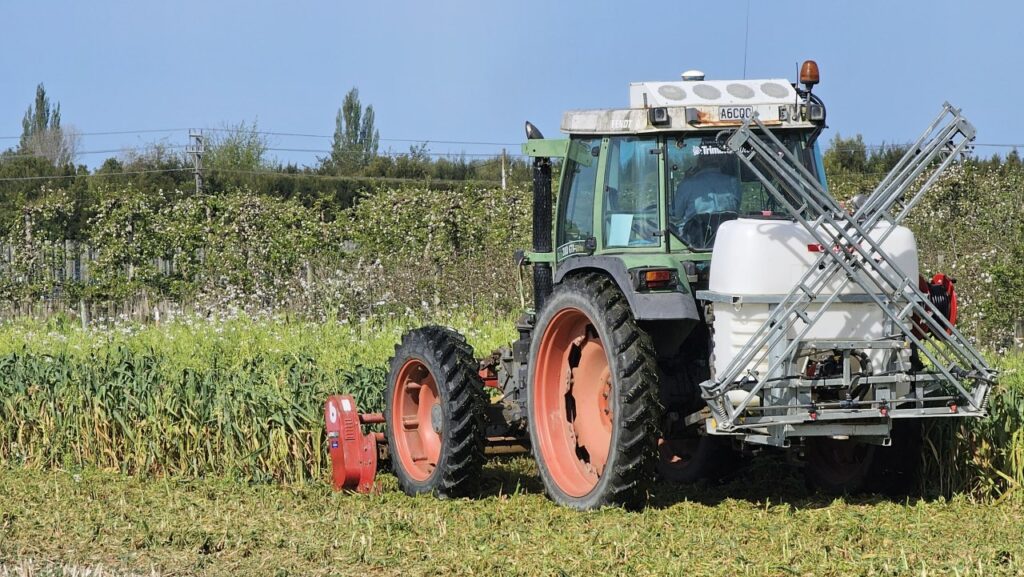
Alex mulching the Regenerative treatment five-species cover crop before seed-set in the tillage radish.

We have also started termination programmes in the extra cover crops we planted. One crop is the same five-species mix as in the Carbon Positive Regenerative and Hybrid plots. Another is rye corn, one has straight tic beans, and one has tic beans and rye corn.
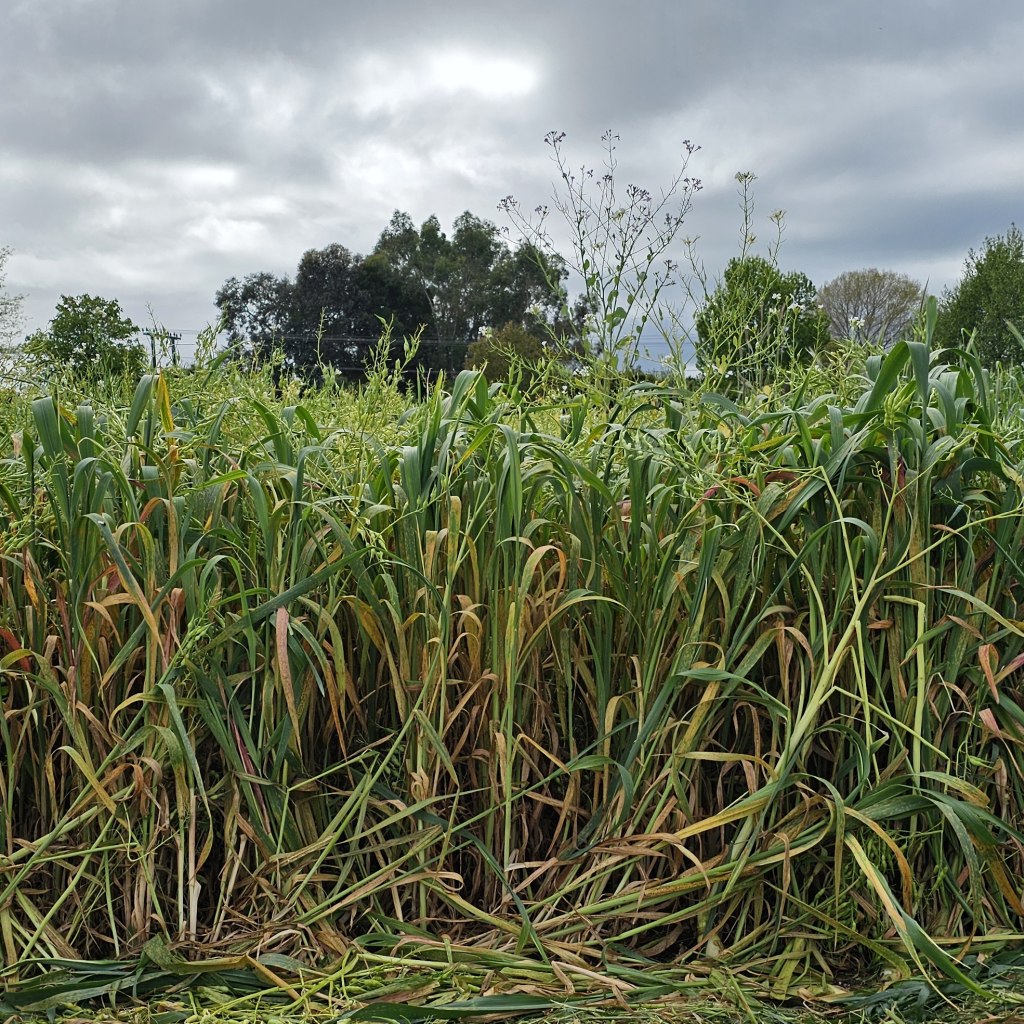
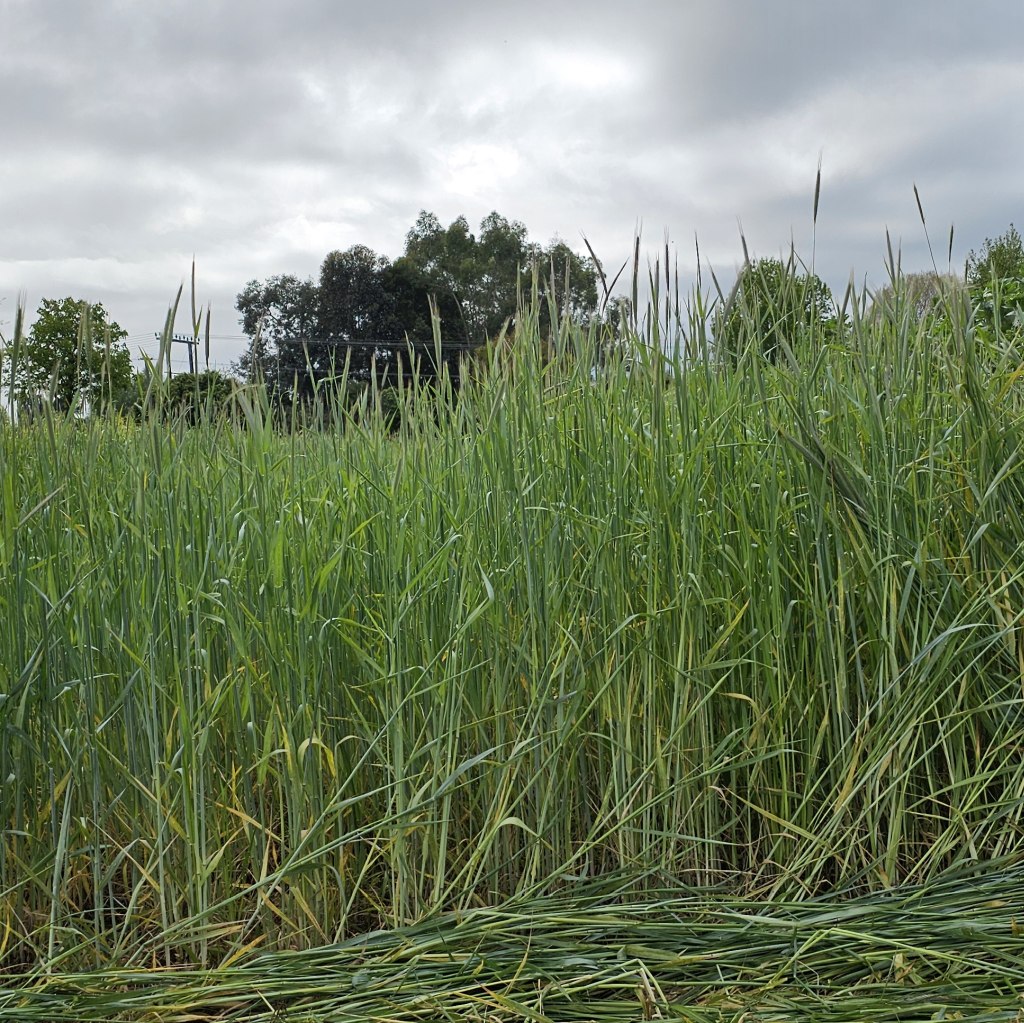
Five-species mix
Rye corn
Tic beans

These crops were planted so we can try things without affecting the Carbon Positive plots. We started crushing strips with a roller-crimper on 10 October and will do more strips over the next few weeks. We are also considering mulching some and spraying any regrowth.
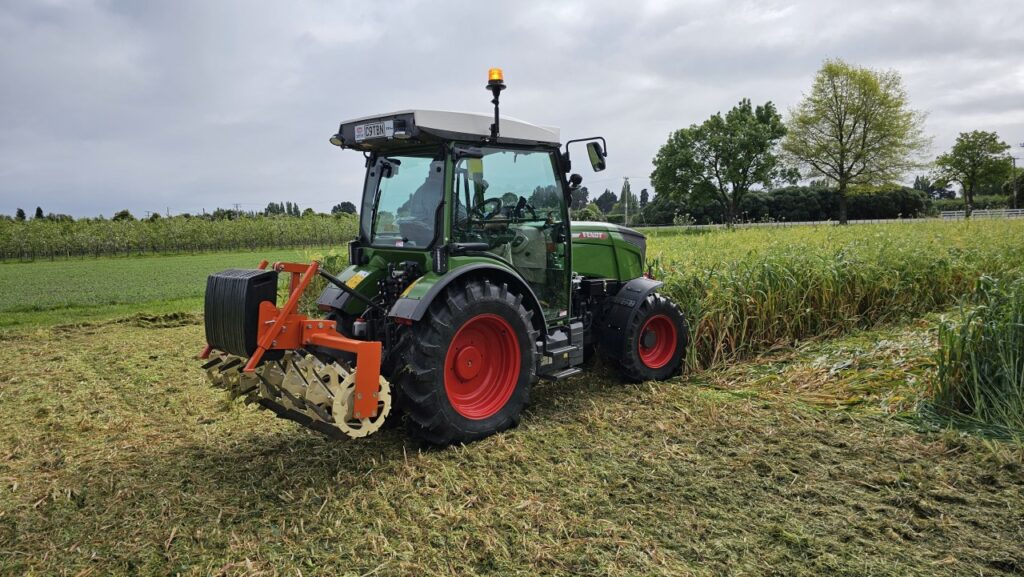
TRS using the Braun crimper-roller to crimp cover crops at the MicroFarm

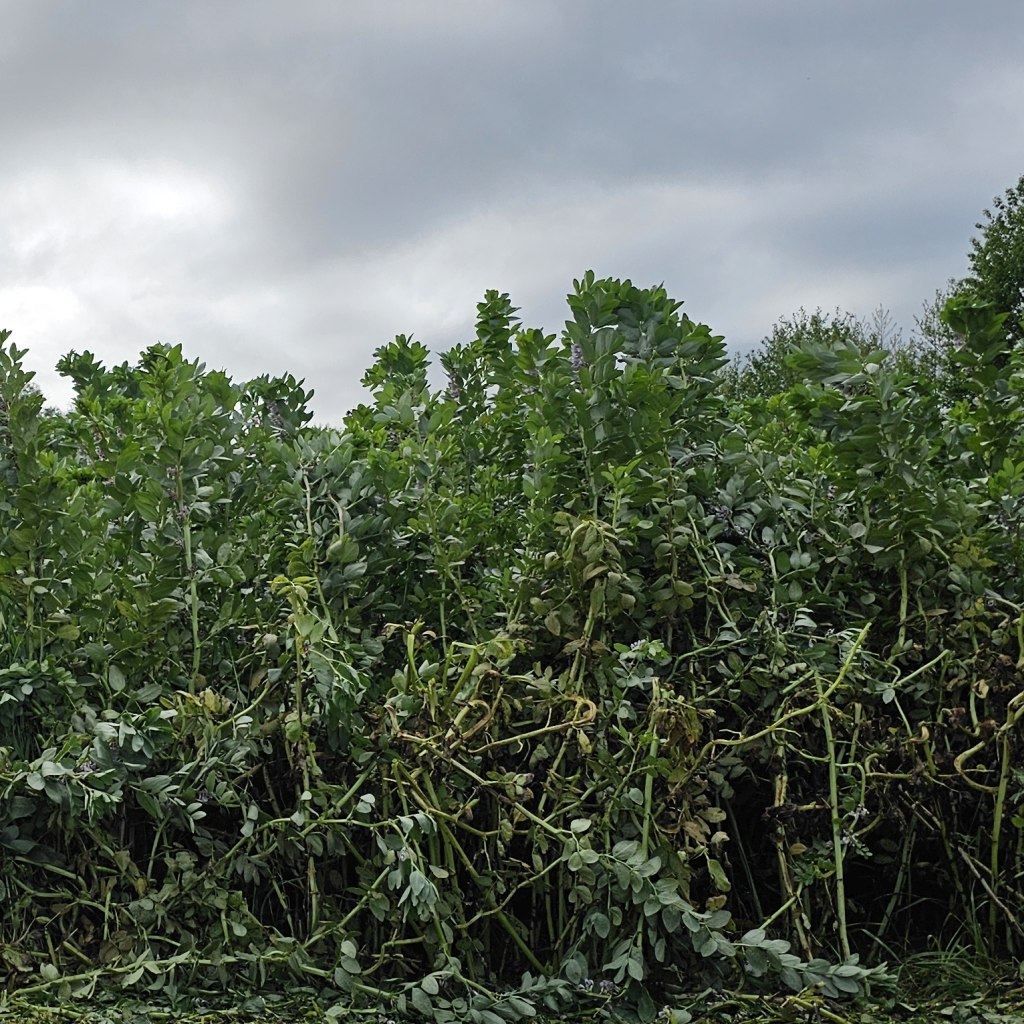
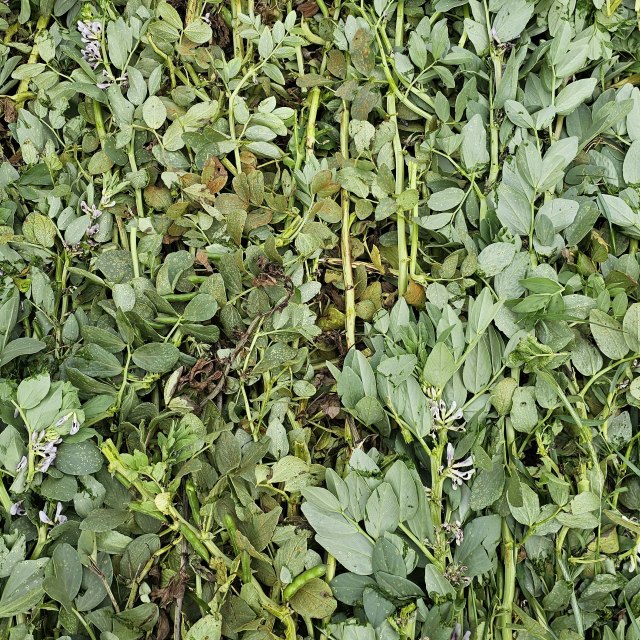
The images below show the bruised bars in the cover crops after roller-crimping. The theory is that once plants reach physiological maturity and flowering, they will not continue new vegetative growth if damaged. Bruising is thought better than cutting.
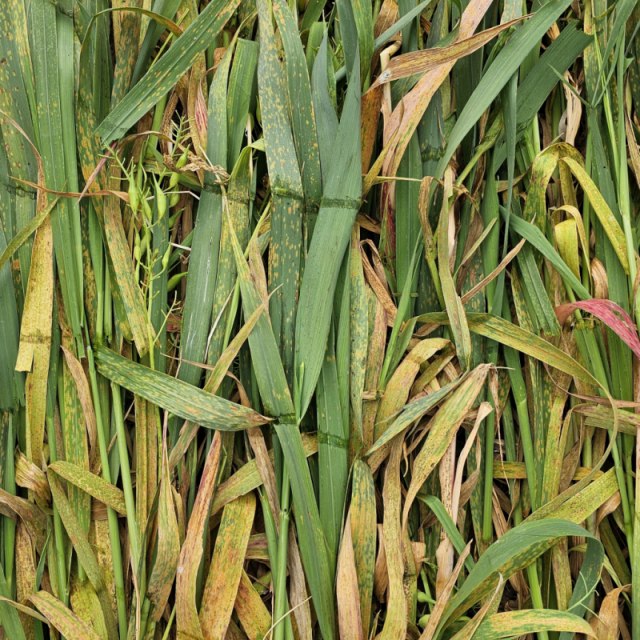
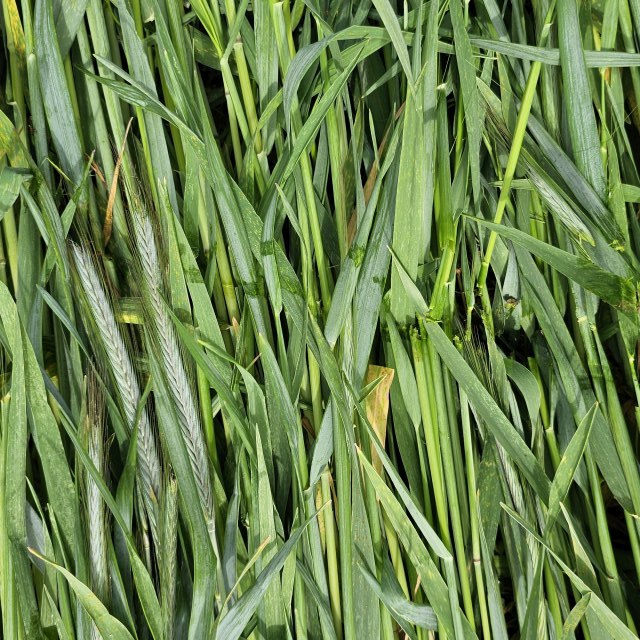
Crimped oats and tillage radish in 5-species mix
Crimped rye corn
Crimped tic beans

Thanks to TRS in Hastings for providing the tractor and crimper for these trials. We will be demonstrating it working at our Field Walk on Tuesday 15 October at the LandWISE MicroFarm. Everyone is welcome – but please register for free.

This work is being completed as part of the MPI Funded Carbon Positive project, a joint programme with the Hawke’s Bay Future Farming Trust. We a grateful for our industry sponsors and everyone who contributes through advisory groups, being tolerant contractors, and in many small ways!

Related

  • Soil Health for Profit – James Hunter
  • Soil Health for Profit – Charlie White
  • Soil Health for Profit – Josh Wing
  • Soil Health for Profit – Pranoy Pal
  • Soil Health for Profit – Olivia Webster
  • Soil Health for Profit – Dan Bloomer
  • Soil Health for Profit – John Evans
  • Soil Health for Profit – Bill Ritchie
  • Soil Health for Profit – Andy Mawley
  • Soil Health for Profit – Sally Anderson
  • Soil Health for Profit – Dirk Wallace
  • Soil Health for Profit – Rowland Tsimba

RECENT POSTS

  • Soil Health for Profit – James Hunter
  • Soil Health for Profit – Charlie White
  • Soil Health for Profit – Josh Wing
  • Soil Health for Profit – Pranoy Pal
  • Soil Health for Profit – Olivia Webster

CATEGORIES

  • Agritech
  • Arable crops
  • Asparagus
  • Conference
  • Courses
  • Cover crops
  • Crop protection
  • Cultivation
  • Events
  • Fresh Vegetables
  • Irrigation
  • Membership
  • Nitrate
  • Nutrition
  • People
  • Permanent crops
  • Pests
  • Process Crops
  • Projects
  • Protected cropping
  • regenerative agriculture
  • Regulations
  • Research
  • soil health
  • Sustainable technology
  • Uncategorized
  • Water resources
  • Weeds
©2023 LandWISE – Promoting sustainable land management

Disclaimer: Any information on the LandWISE website or linked LandWISE resources is of a general nature only. We endeavour to provide accurate and adequate information relating to the subject matters contained in it. It has been prepared and made available to all persons and entities strictly on the basis that LandWISE, its researchers and authors are fully excluded from any liability for damages arising out of any reliance in part or in full upon any of the information for any purpose. No endorsement of named products is intended nor is any criticism of other alternative, but unnamed product.