
When the Carbon Positive project began, most of the Operations Advisory Group probably thought “six years = six crops”. Certainly, the focus for the operations group has been on the summer crop(s). A lot of energy has been put into getting the operations right for each treatment. Our winter cover crops, initially thought to be just something that happens between cash crops, have turned out to be more important than expected. We are now seeing the project as growing twelve or thirteen crops in six years!
What to plant?
First off, what should we plant? I don’t think we have yet got our cover crop mixes quite right. This year, our hybrid and regen treatments were planted in a diverse mix of 7 species (black oats, tillage radish, vetch, buckwheat, sunflowers, crimson clover and Persian clover). This was to get lots of plant diversity over the winter.
A frost in May killed the buckwheat and sunflowers, which meant they weren’t present over the winter. We planted tillage radish as it is supposed to be the “crowbar of the soil” and will break through tillage pans. Unfortunately, our radishes knew better, hit the pan and, in some areas, popped themselves 10cm out of the ground. This is potentially an issue for both the hybrid and the regen treatments, as chunks of radish could be picked up by the harvester and end up at the factory which may be a problem for product contamination.
Additionally, the radish started to flower and was beginning to set seed, so radish if unmanaged, could have become be a new weed species for us.
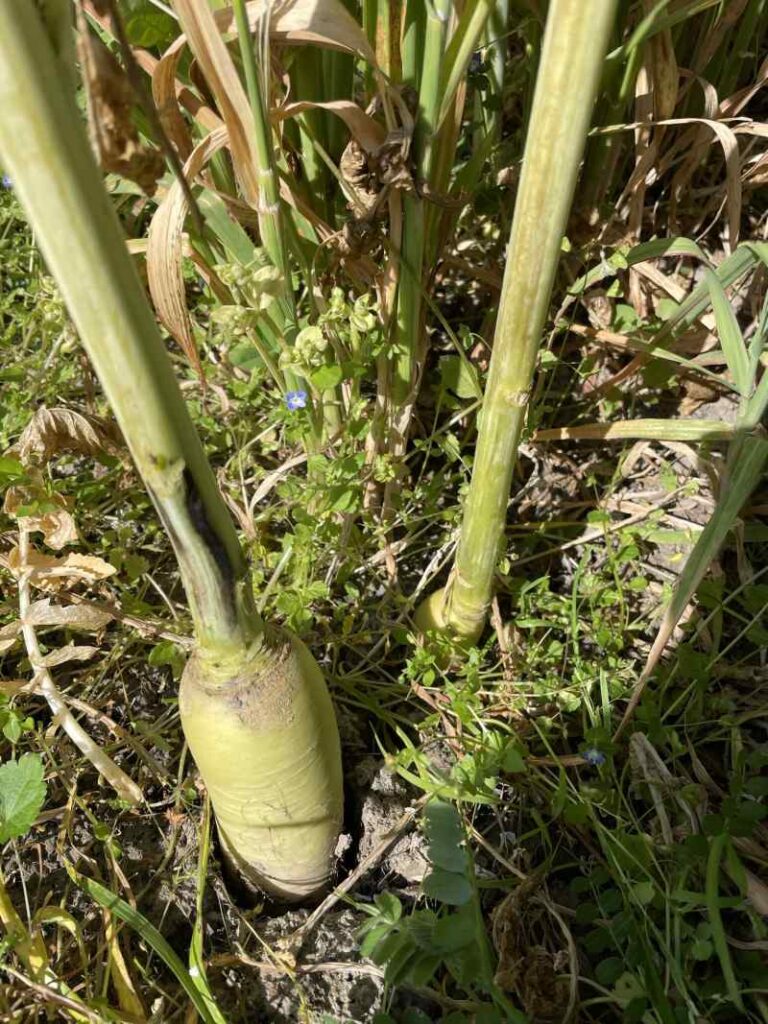
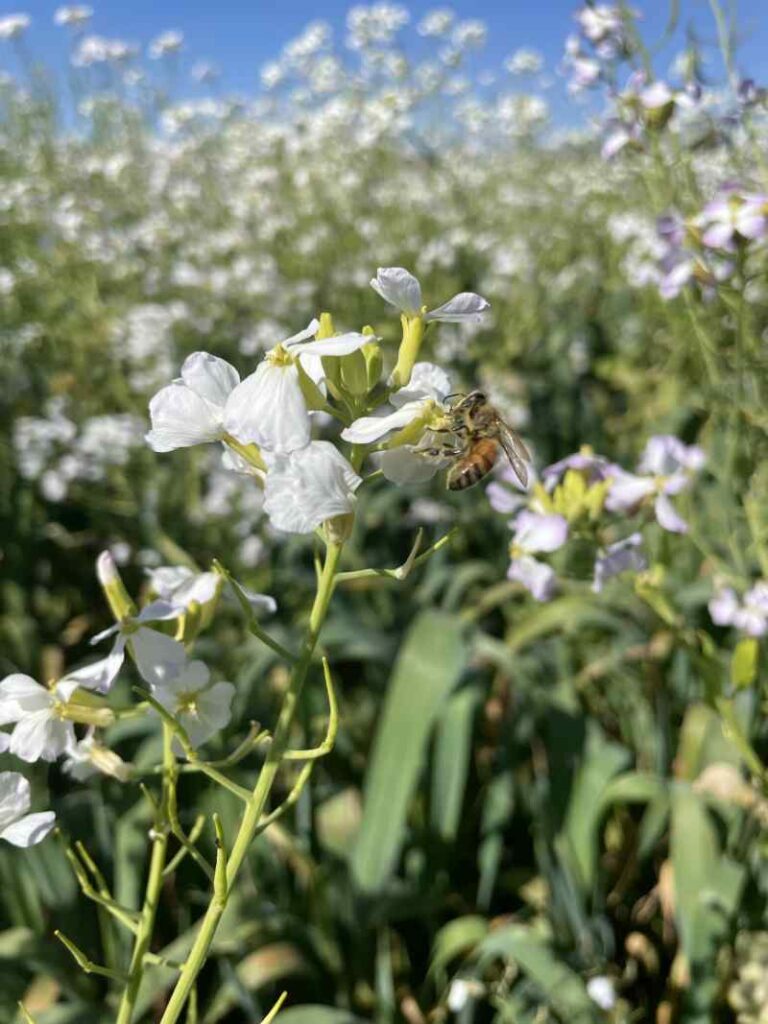
In this conversation, there is the question of how much plant diversity do we need? Some of the species we are using, might be okay in a pastoral grazing scenario, but could be hard to manage in a cropping system and therefore become a weed for us. In the systems we are looking at, are we able to select fewer plants, that provide functional diversity, without adding added complexity of to the management of the cover crop?
Another consideration is disease carry over. We intentionally avoided planting tic beans this year, as they could carry unwanted diseases into the following legume crops. Tic beans may be an option ahead of other crops.
Do we graze?
One of the five regenerative principles is to integrate livestock, which we have not yet done in our Regen treatment. However we have grazed our Conventional treatment, which might seem a bit backwards. It is common for Heretaunga Plains growers to plant an annual ryegrass over the winter and graze it with lambs, so we are including sheep in our Conventional treatment.
In the last two years, we wanted to use the cover crop as a mulch on the surface for our main crop to keep the soil surface covered, another of our regenerative principles. If we have a mulch on the soil surface, we hope it will significantly reduce the need for herbicides. To do this effectively, we need to grow a lot of biomass, and therefore don’t want to have sheep or cattle grazing it. We don’t really have a long enough winter growing season to do both. This is where we find tension between some of the regen principles when applied to an annual cropping system. We might yet include livestock; however, we aren’t sure what this will look like in practice.
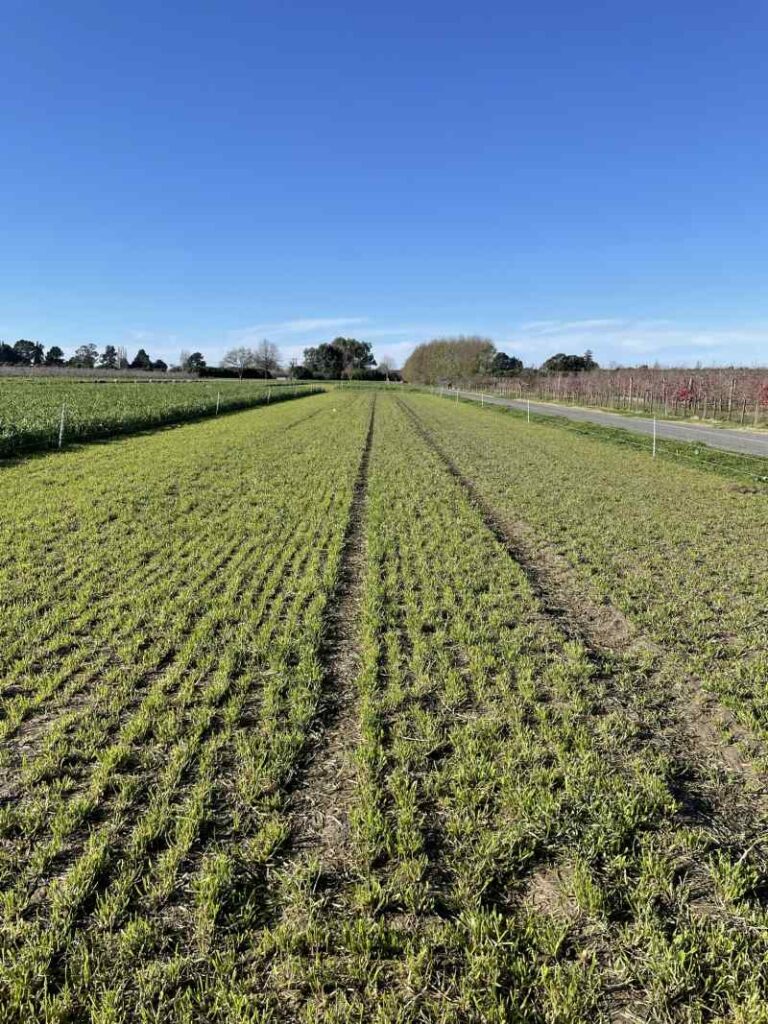
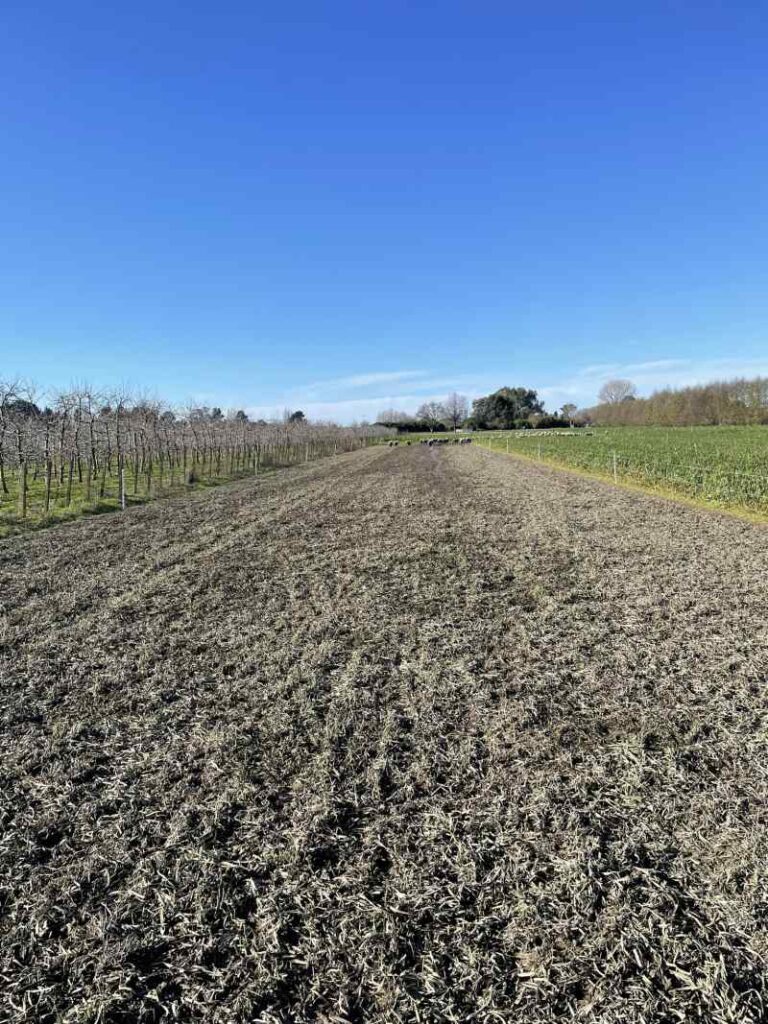
In addition, lambs can do considerable soil damage over the winter. The photos below show the difference between grazing for a couple of weeks in dry conditions and grazing over a wet weekend this winter.
When to terminate?
Ahead of the tomato planting last year, we had a cover crop of oats, vetch and lupins in the Regen treatment. You may remember that we planned to use a modified tomato planter, which transplants seedlings directly into a mulched cover crop, eliminating the need for both cultivation and herbicides. Just before planting, we met two problems with this plan.
The first issue was that the cover crop was still actively growing and sucking moisture out of the soil, so the soil was very dry in the regen treatment. This led to large, blocky clumps of soil forming in the top 10cm of the profile. The second issue was that the timing of maturity wasn’t right for mulching and killing the oats. In a test area of cover crop, we found the oats regrow, and we had very limited herbicide options to deal with this. It might have worked if we had waited a couple of weeks, however we were working with a factory schedule and had a planting date that wasn’t very flexible.
We want to apply lessons from that experience this year. We are already seeing low soil moisture levels and low nitrate levels in the Regen treatment. To manage the amount of biomass we have grown, and stop the flowering radish from seeding, the cover crop was mulched on the 1st of October. We expect the mulching will not kill the oats, and that we will need to manage regrowth.
How to terminate?
We planted a winter cover crop, it has grown all winter, so what next? Our Operations Advisory Group is having an ongoing discussion on how we terminate it in our Regen treatment. The initial plan was to use a roller crimper, but the consensus is that this is probably not quite the right tool for the job. We have since mulched the cover crop, but we will need another action to terminate it (oats weren’t mature enough). We have two options; we either spray out the oat regrowth or we cultivate to bury the residue.
This is an important conversation for us, as the use of glyphosate is not widely accepted by the Regenerative community. But our discussions with no-till or minimum tillage growers, and some of the Canterbury regenerative croppers, show it is an important tool for successfully reducing or eliminating cultivation. Most of the literature indicates that cultivating is the number one thing to avoid if we want to increase soil carbon, which is the main metric in this trial.
Weed management is a key consideration in beans as there are few herbicide options. If the crop is too weedy it won’t be harvested. If we cultivate, we will have to manage weeds through a suite of other herbicides that have the potential to as harmful as, or worse than glyphosate when compared using the Environmental Impact Quotient.
How do we best minimise soil disturbance? Both cultivation and herbicide use fall into the category of soil disturbance. The question for our operations group comes down to what is the ‘lesser of two evils’- glyphosate or cultivation?
More questions than answers!
A key lesson from the last two years, is that cover crops are important. We have also found that cover crop management is quite complex. There are a lot of questions we need to ask ourselves:
• What is best to plant? Does this change depending on what we grow next?
• What is the ideal way to terminate, in order to minimise soil disturbance?
• How will the timing of termination impact the planting date?
• How much diversity do we want/need?
• How do we manage the biomass grown?
• What additional equipment do we need?
• Livestock vs mulch? Cattle vs sheep?
The answers to these questions will probably change for each crop, each year depending on a whole range of factors. We have established a small separate demonstration area on site where we are playing around with different cover crop options so we can learn more each winter.