
Skip to content
Menu
LandWISE – Promoting sustainable land management
  • Welcome
    • About
    • LandWISE Committee
    • Contact
  • Projects
    • Carbon Positive
      • Carbon Positive Reports
    • Nitrachek: Farmer Friendly Nitrate Testing
    • SLAKES: a cost-effective measure of soil structural stability
    • Soil Repair after Cyclone Gabrielle
    • Vegetable Production Nitrogen Management
    • Best Management of Nitrates in Process Cropping
    • Future Proofing Vegetable Production
    • Herbicide Resistance Management
  • Events
    • Cyclone Gabrielle Research Symposium
      • Historical North Island Flood Events
      • An extraordinary storm: the severity of Cyclone Gabrielle’s weather in Hawke’s Bay
      • The Science Response in the Year of Storms; A Gisborne/Tairawhiti perspective
      • Insights into causes of landslides triggered by Cyclone Gabrielle
      • The effects of Cyclone Gabrielle on fruit tree health in Hawke’s Bay
      • Impact of Cyclone Gabrielle on stonefruit orchards in Hawke’s Bay: a case study
      • Charting the Course following Cyclone Gabrielle
      • Baseline sediment sampling in Tairawhiti and Hawke’s Bay
      • Impacts on cropping businesses
      • Understanding the flooding caused by Cyclone Gabrielle
      • Building Flood Damage from Ex-Tropical Cyclone Gabrielle
      • Food safety and critical incidents: A unified approach for safer produce
      • Silt nutritional status and contamination concerns
      • Lessons from the horticultural sector response to Cyclone Gabrielle
      • Ecological impacts of Cyclone Gabrielle
      • Cyclone Gabrielle and Poplar Windthrow in Northland
      • Seed Size and Establishment Method Determine Crop Recovery Following Cyclone-Induced Silt Deposition
      • Returning to (some) baseline sampling sites to assess cropping soil recovery
      • Recovery of annual cropping ground – Grower learnings
      • Recovery of Annual Cropping over 2 Years
      • Technical and extension learnings from Cyclone Gabrielle
    • Getting to Carbon Positive!
      • Getting to Carbon Positive – Presenters
    • Rebuilding Our Soils
      • Rebuilding Our Soils – Presenters
    • Events Archive
  • Tools
    • Nitrachek Calculator
    • Carbon Calculator
    • Nutrient Budget
    • Irrigation Evaluation – IRRIG8
      • IRRIG8: Centre Pivot
        • IRRIG8-online: Centre Pivot User Guide
      • IRRIG8: Linear Move
      • IRRIG8: Travelling Irrigator
        • IRRIG8-online: Travelling Irrigation User Guide
      • IRRIG8: Multiple sprayline calculator
      • IRRIG8: Solid set irrigation
      • IRRIG8: Pressure and energy
        • Pressure and Energy Calculator: User Guide
    • ANOVA Tool for statistical significance
    • Fertspread Spreader Calibration
    • Fertspread Placement Calibration
    • Soil Infiltration Calculator
      • Disc Permeameter User Guide
      • Disc Permeameter Calculator: Frequently Asked Questions
  • Blog
  • Sign Up
  • Login
  • Members Only
    • Online Learning
  • Account
  • Site Search
LandWISE – Promoting sustainable land management

2024 Pea Harvest Results

Posted on November 29, 2024

Our McCain Foods peas were harvested on the 26th of November, one week ahead of schedule. The dry spring meant the peas were ready sooner than expected. You can read more about this year’s pea season here.

Ahead of the machine harvest, in each plot we hand harvested all of the pea vines from four 2 x 1m2 subplots. The plants were taken to the McCains mini-viner in Waipawa where the peas were separated from the pods and the vine, and weighed to determine yield.
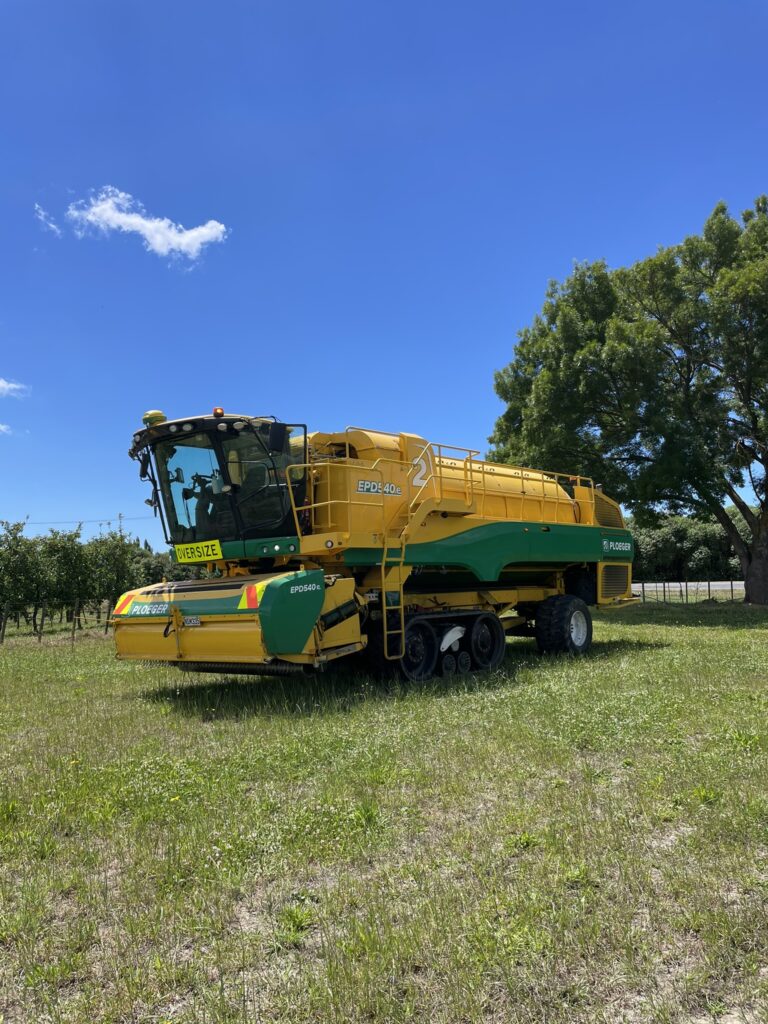
Tasman Harvesting Viner
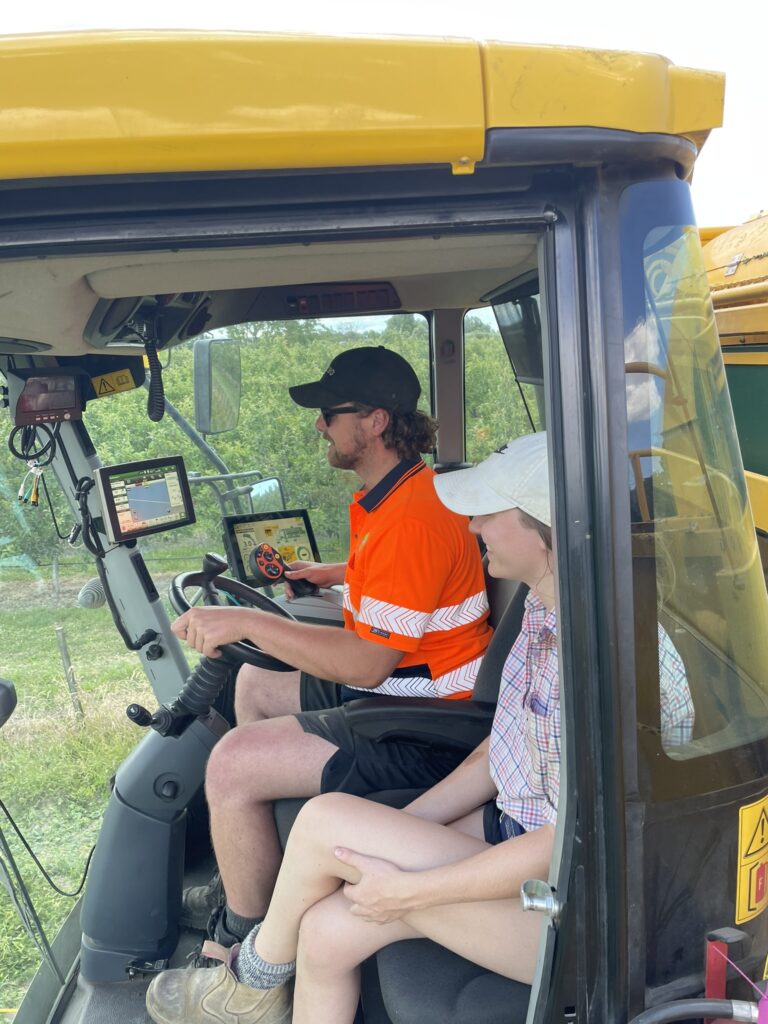
Viner driver Finn and LandWISE Summer Intern Olivia

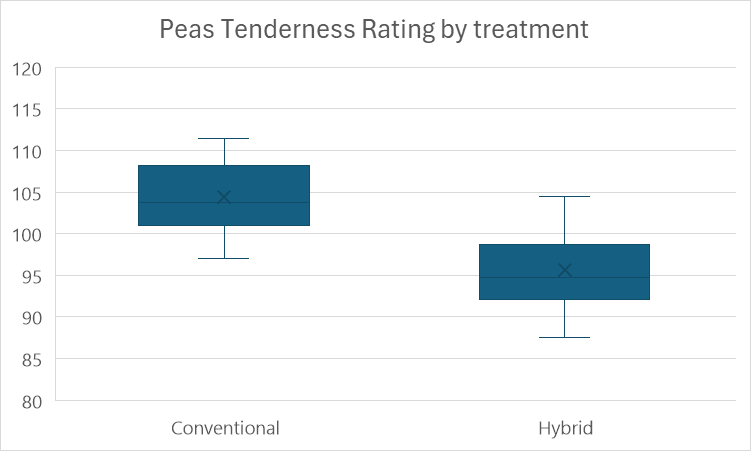
A subsample of the peas was used to determine the Tenderness Rating (TR). TR is a key factor in determining the price paid for process peas. Generally, a higher price is paid for lower TR peas, as the yield is typically lower. Subsamples were also collected for laboratory analysis, and for drying to determine dry matter content.
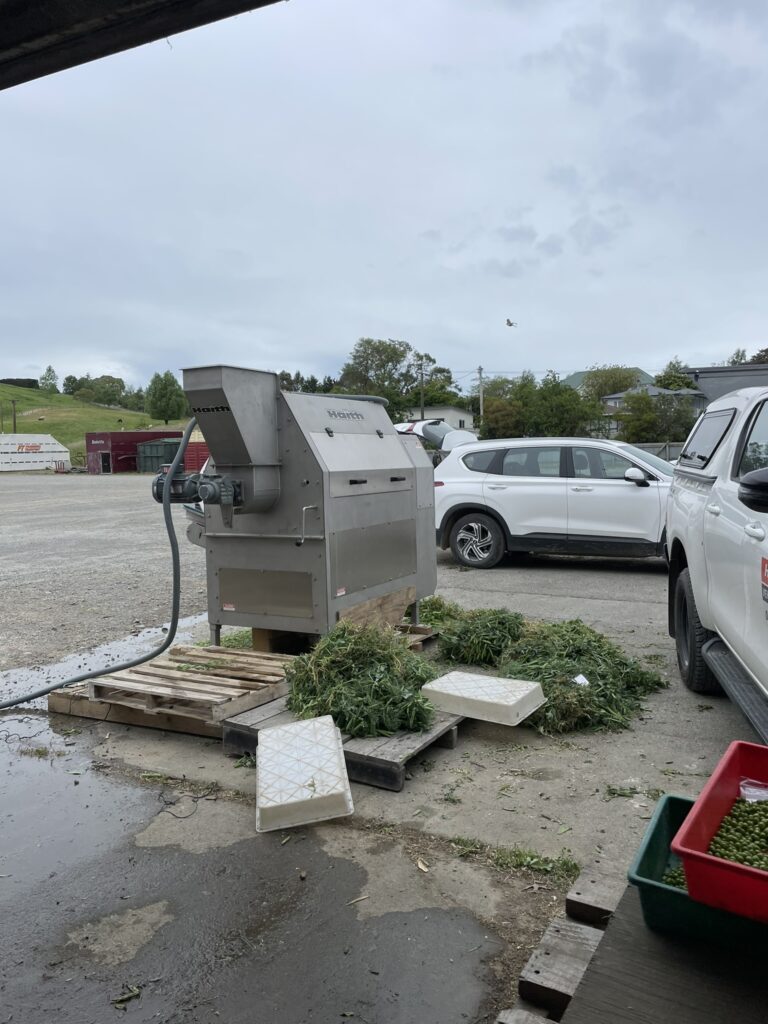
McCain’s mini-viner

Some results!

We are still processing samples and awaiting laboratory results, however we can share the following.

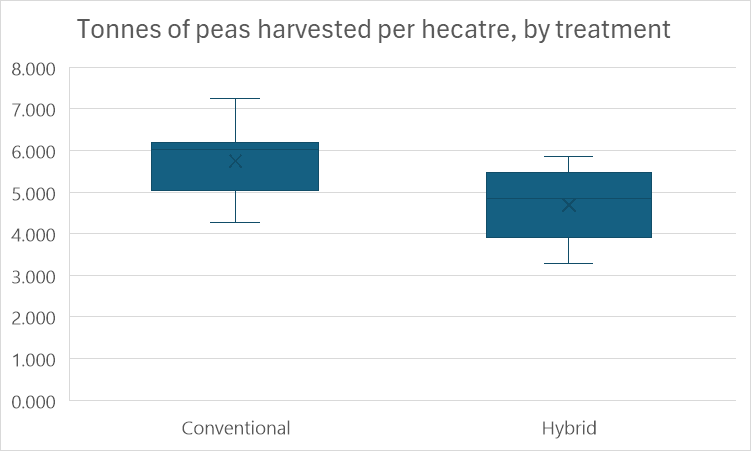
Our Conventional treatment on average produced a paid weight of 5.74 T/ha, and the Hybrid treatment 4.69 T/ha. This is not unsurprising considering the slow start the peas in the Hybrid treatment had (see previous post).
The average Tenderness Rating (TR) for the Conventional treatment was 104, and the Hybrid slightly lower at 96. This means that the Hybrid yielded a higher price per ton than the Conventional.
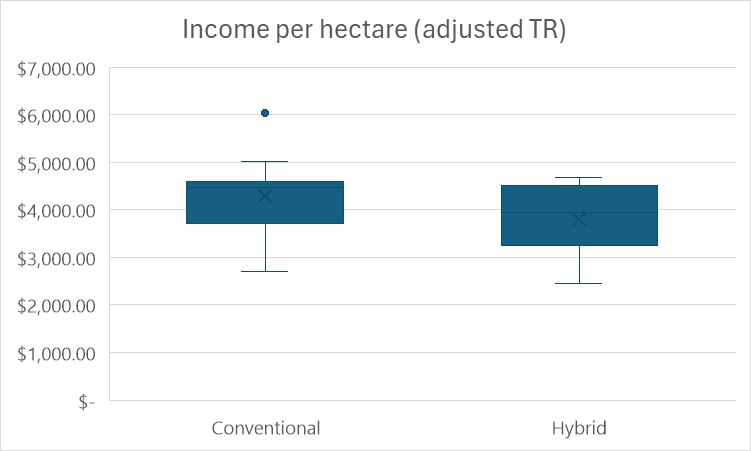
At this stage, the estimate of income received from the peas is approximately $4290.20 for the Conventional treatment and $3797.50 for the Hybrid. We are still finalising input costs, and will report on margins later in the year. The Hybrid treatment did have a lower cost of production than the Conventional, so it will be interesting to see final gross margins.
Next Steps

We are due to plant our beans on the 28th of December. We have completed our post-harvest operations, which has included baling the vine on the Conventional treatment followed by disc ripping. The Hybrid was disc ripped to incorporate the vine, with the aim of retaining nutrients, particularly nitrogen. The Regen treatment was also disc ripped to mechanically kill the oats which had regrown.

The aim of disc ripping is to attend to any compaction, bury any residues, and level the surface as much as possible ahead of planting beans.

A big thanks!

As always, we want to thank our dedicated operations advisory team for their input into our pea crop.

This includes Mike Flynn, Ben Prebble, Allan Machakaire, Scott Marillier and Renee (McCain Foods), Bruce Mackay (Kraft-Heinz Wattie’s), Gareth Holder (Redloh), Scott Lawson (True Earth), Phil Schofield (Reset Regenerate), Shelley Bath (Horticentre) and Mike Kettle (Mike Kettle Contracting). We would also like to thank Jonny Wilson for completing the disc ripping, and navigating our small plots with very long equipment!
  • Agriculture
  • Carbon Positive
  • McCain
  • Pea
  • Process Vegetables
  • Regenerative
  • Sustainability

1 thought on “2024 Pea Harvest Results”

  1. Pingback: 2024 McCains Pea Production - LandWISE - Promoting sustainable land management

Comments are closed.

  • Cyclone Gabrielle Research Symposium
  • Biodiversity Strips Update
  • Carbon Positive: Butternuts
  • Carbon Positive: Butternut Planting to Side Dressing
  • Nitrate Levels on the MicroFarm
  • Cyclone Gabrielle Research Symposium
  • Introducing Carys Luke, our Summer Intern
  • Soil Infiltration Calculator
  • MicroFarm Biodiversity Update
  • Irrigation System Testing
  • Carbon Positive: Butternut Planting
  • NZARM Conference 2025

RECENT POSTS

  • Cyclone Gabrielle Research Symposium
  • Biodiversity Strips Update
  • Carbon Positive: Butternuts
  • Carbon Positive: Butternut Planting to Side Dressing
  • Nitrate Levels on the MicroFarm

CATEGORIES

  • Agritech
  • Asparagus
  • Conference
  • Courses
  • Cover crops
  • Cultivation
  • Events
  • Fresh Vegetables
  • Irrigation
  • Membership
  • Nitrate
  • Nutrition
  • People
  • Permanent crops
  • Pests
  • Process Crops
  • Projects
  • Protected cropping
  • regenerative agriculture
  • Regulations
  • Research
  • soil health
  • Sustainable technology
  • Uncategorized
  • Water resources
  • Weeds
©2023 LandWISE – Promoting sustainable land management

Disclaimer: Any information on the LandWISE website or linked LandWISE resources is of a general nature only. We endeavour to provide accurate and adequate information relating to the subject matters contained in it. It has been prepared and made available to all persons and entities strictly on the basis that LandWISE, its researchers and authors are fully excluded from any liability for damages arising out of any reliance in part or in full upon any of the information for any purpose. No endorsement of named products is intended nor is any criticism of other alternative, but unnamed product.