
All Systems Stable: Early Insights from a Crop-Driven Carbon Cycle
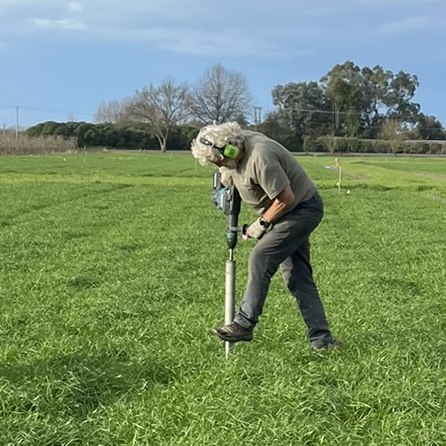

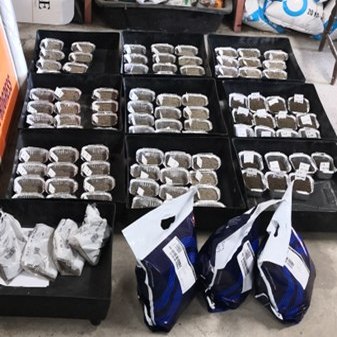
Carbon Positive is, unsurprisingly, tracking soil carbon levels under our three different management approaches. We have two key measurements; total soil carbon and hot water extractable carbon. Hot water extractable carbon is a laboratory test measure of labile carbon, which is the ‘active’ carbon that drives soil biological processes. It is a very small portion of the total carbon, but it is doing the heavy lifting.
Starting from our November 2022 baseline of 4.1 tonnes of labile carbon per hectare, levels rose modestly to 4.6 T/ha by June 2024 following summer sweetcorn and winter cover crops. The dramatic change came after the winter cover crops that followed the process tomato crop. By November 2024, carbon stocks had jumped to 5.3 T/ha across all treatments – a 29% increase from baseline. But this peak proved temporary. Following the peas and beans double-crop, June 2025 measurements returned to 4.2 T/ha, essentially back where we started. Look at the interactive charts below.
The most striking finding is how similarly all three management approaches responded to each crop sequence. Whether under conventional, hybrid, or regenerative management, the carbon patterns were remarkably consistent: modest gains after sweetcorn, substantial peaks after tomatoes and cover crops, and return to baseline after legumes.
This suggests the biological systems under all three management approaches are equally robust and responsive. More importantly, any treatment effects are currently being swamped by much larger crop-driven fluctuations. The summer crop choice appears to matter more than tillage practices or input strategies, at least in these early years.
Process tomatoes produce a lot of biomass – not just fruit, but extensive root systems and above-ground residues that get incorporated after harvest. The charts show that at the end of the tomato crop, the labile carbon in the deeper layers was much higher. Then the November 2024 sampling captured this system at peak carbon input, just as winter cover crops were maturing and contributing even more biomass.
The subsequent return to baseline following legumes suggests that, while peas and beans fix nitrogen and benefit soil health in other ways, their carbon inputs and cycling patterns clearly differ from high-biomass crops like tomatoes.
The conventional system plants annual ryegrass and grazes it with lambs through winter, while hybrid and regenerative treatments establish ungrazed multispecies cover crop mixes. Despite these fundamentally different approaches – livestock integration versus plant-only systems – both pathways track the same carbon cycling patterns through all crop sequences.
Three years of data teaches us that patience is essential when evaluating soil carbon outcomes. The large crop-driven fluctuations mean we need several complete rotation cycles before drawing firm conclusions about management system effects. However, the consistent responses across all treatments offer important reassurance indicating that all approaches demonstrated equivalent biological function and responsiveness to crop inputs. Rather than seeing carbon “loss” in the return to baseline by 2025, we’re observing a biologically active system cycling around a stable equilibrium.
So far, our research demonstrates that soil carbon in working farm systems follows complex biological rhythms that require patient observation. The apparent “return to baseline” doesn’t represent system failure, but rather the natural cycling of a healthy, biologically active farming system responding predictably to diverse crop inputs. We’re sampling again in early November – what will we find?
Make sure you’ve signed up to receive our newsletter to hear when field walks and other relevant events are being offered.
