In November, I attended the New Zealand Association of Resource Management Conference in Blenheim. The Changing Landscapes conference explored insights into land use capability and impacts on land management, freshwater and coastal ecosystems.
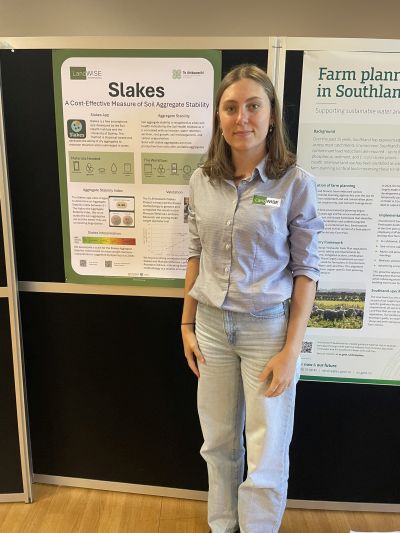
Day 1 consisted of presentations in the morning, and I presented a poster about the Slakes soil aggregate stability project we completed with Te Ahikawariki. In the afternoon, I attended Te Hononga with Ngaati te Ata Waiohua & Auckland Council to Prevent Erosion and Hūnua case study master classes.
I enjoyed hearing about the work the Auckland Council are doing to prevent erosion at significant pā sites. It was nice to hear about the relationships they have formed with local iwi and how closely they have been working together on this project. It was really interesting to hear about the different methods being trialled to restore native bush in the Hūnua case study, where 2,300 hectares of Pinus radiata are being converted back to native forest.
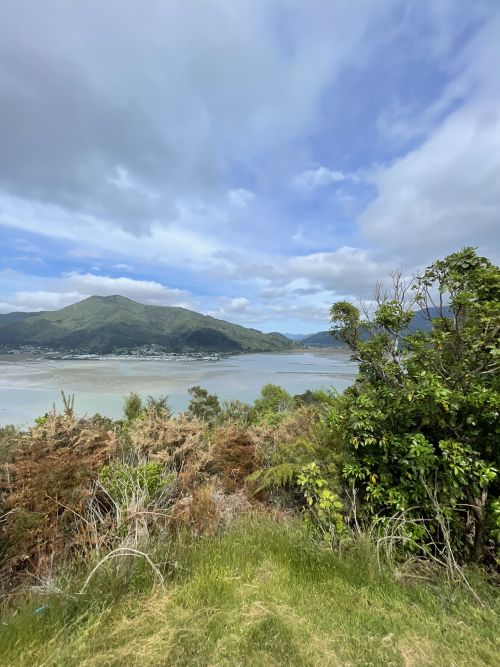
On Day 2, I attended the Te Hoiere field trip. We went to Cullens Point, which overlooks Pelorus Sound, Mahau Sound, and the township of Motuweka/Havelock. Here, we discussed the issue of accelerated sedimentation as 259,000 tonnes of suspended sediment are deposited in the estuary annually, making it one of the muddiest estuaries in New Zealand. From there, we travelled to the Te Hora Marae. It was a privilege to be welcomed onto one of the few marae in the South Island. While at the marae, we got an overview of the Te Hoiere project.
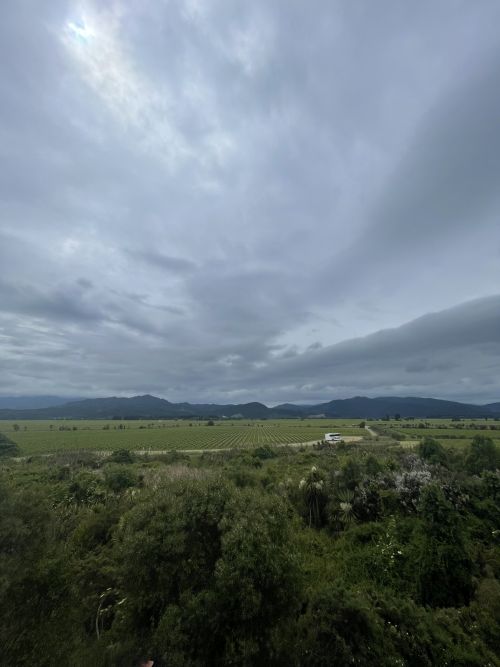
We also visited Vinarchy winery and had a walk through their restored wetland. The wetland provides biodiversity and creates a home for aquatic organisms and native birds.
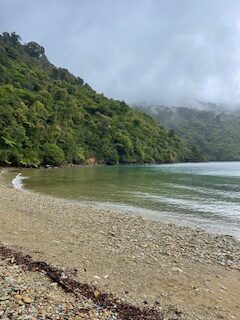
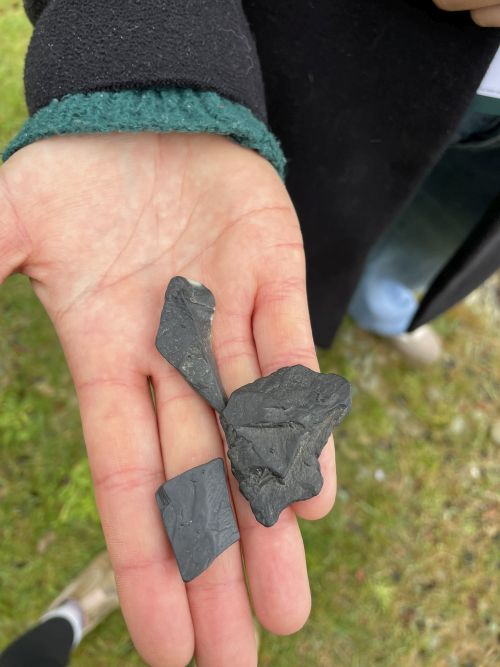
On Day 3, I took a cruise through the stunning Queen Charlotte Sound, with a stop at historic Meretoto/Ship Cove. It is one of the places Captain Cook visited on several of his voyages and where he traded with the local iwi. Along the shoreline, we were shown flakes of argillite rock left behind from traditional toolmaking. The stones are not naturally found in that part of New Zealand, and their worked shapes make it clear they were taken there by Māori generations ago.
One of the real highlights of this day was watching dolphins swim alongside the boat as we travelled back through the sounds.