
Skip to content
Menu
LandWISE – Promoting sustainable land management
  • Welcome
    • About
    • LandWISE Committee and Staff
    • Contact
  • Projects
    • Carbon Positive
      • Carbon Positive Reports
    • Nitrachek: Farmer Friendly Nitrate Testing
    • SLAKES: a cost-effective measure of soil structural stability
    • Soil Repair after Cyclone Gabrielle
    • Vegetable Production Nitrogen Management
    • Best Management of Nitrates in Process Cropping
    • Future Proofing Vegetable Production
    • Herbicide Resistance Management
  • Events
    • Soil Health for Profit
      • Soil Health for Profit Presenters
        • What makes a farm “regenerative”?
        • Soil and Plant Nutrition at Harvest Moon
        • Regenerative agriculture principles in Kiwifruit production
        • Carbon Positive: Applying Regenerative Principles to Intensive Process Vegetable Production 2025-2026
        • Carbon Positive: making sense of carbon data
        • A Career in Cropping ? building soil
        • Cyclone Gabrielle Research Symposium: Lessons for the management of highly productive land
        • Cyclone Recovery: Turning sediment to soil
        • Cascading impacts of Cyclone Gabrielle ? and why soil health is business resilience
        • Lessons Learned from 20 Years of Cover Crop and Soil Health Research and Extension
        • Technologies at Harvest Moon
        • Do all nitrogenamendmentshave the same footprint?
        • Answers Under Foot: Should Soil Health Be Our #1 Sustainability Goal?
        • Going way back: LandWISE?s History of Minimum Tillage
        • Crop Stacking: The best practice of tomorrow
        • Long-term evaluation of tillage systems for maize silage in New Zealand
        • Minimising Tillage at Ludlow Farms
        • Long-Term Maize Establishment andCover Crop Research in the Waikato
        • Minimum tillage discussion panel
    • Cyclone Gabrielle Research Symposium
      • Historical North Island Flood Events
      • An extraordinary storm: the severity of Cyclone Gabrielle’s weather in Hawke’s Bay
      • The Science Response in the Year of Storms; A Gisborne/Tairawhiti perspective
      • Insights into causes of landslides triggered by Cyclone Gabrielle
      • The effects of Cyclone Gabrielle on fruit tree health in Hawke’s Bay
      • Impact of Cyclone Gabrielle on stonefruit orchards in Hawke’s Bay: a case study
      • Charting the Course following Cyclone Gabrielle
      • Baseline sediment sampling in Tairawhiti and Hawke’s Bay
      • Impacts on cropping businesses
      • Understanding the flooding caused by Cyclone Gabrielle
      • Building Flood Damage from Ex-Tropical Cyclone Gabrielle
      • Food safety and critical incidents: A unified approach for safer produce
      • Silt nutritional status and contamination concerns
      • Lessons from the horticultural sector response to Cyclone Gabrielle
      • Ecological impacts of Cyclone Gabrielle
      • Cyclone Gabrielle and Poplar Windthrow in Northland
      • Seed Size and Establishment Method Determine Crop Recovery Following Cyclone-Induced Silt Deposition
      • Returning to (some) baseline sampling sites to assess cropping soil recovery
      • Recovery of annual cropping ground – Grower learnings
      • Recovery of Annual Cropping over 2 Years
      • Technical and extension learnings from Cyclone Gabrielle
    • Getting to Carbon Positive!
      • Getting to Carbon Positive – Presenters
    • Rebuilding Our Soils
      • Rebuilding Our Soils – Presenters
    • Events Archive
  • Tools
    • Fertiliser Application Equipment Calibration
      • Fertspread Spreader Calibration
      • Fertspread Placement Calibration
    • Nitrachek Calculator
    • Irrigation Evaluation – IRRIG8
      • IRRIG8: Centre Pivot
        • IRRIG8-online: Centre Pivot User Guide
      • IRRIG8: Linear Move
      • IRRIG8: Travelling Irrigator
        • IRRIG8-online: Travelling Irrigation User Guide
      • IRRIG8: Multiple sprayline calculator
      • IRRIG8: Solid set irrigation
      • IRRIG8: Pressure and energy
        • Pressure and Energy Calculator: User Guide
    • Soil Infiltration Calculator
      • Disc Permeameter User Guide
      • Disc Permeameter Calculator: Frequently Asked Questions
    • Carbon Calculator
    • ANOVA Tool for statistical significance
  • Blog
  • Sign Up
  • Login
  • Members Only
    • Online Learning
  • Account
  • Site Search
LandWISE – Promoting sustainable land management

2026 Winter Cover Crops

Posted on August 17, 2026

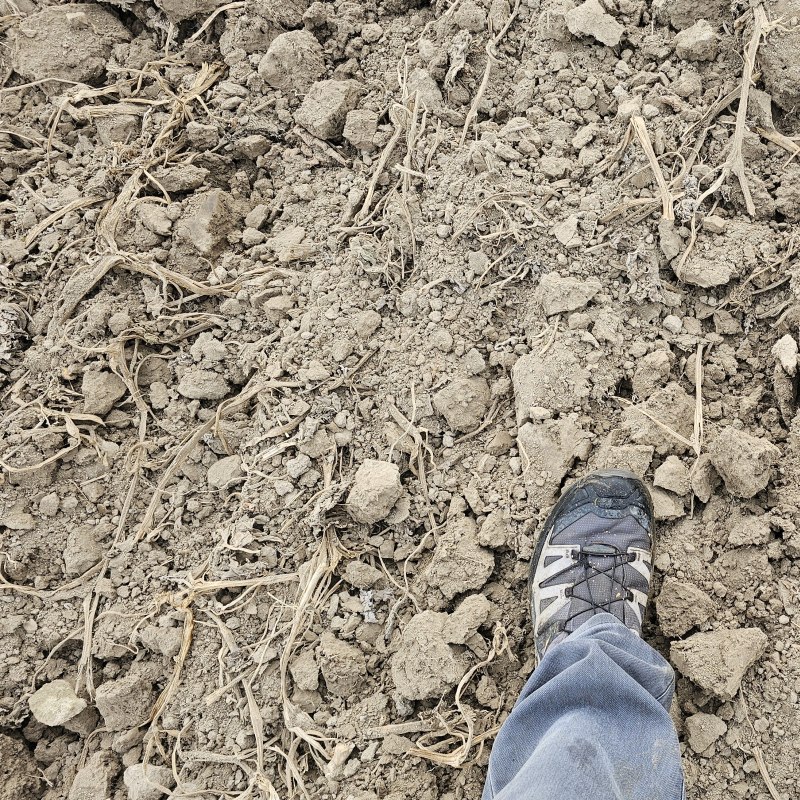
By the time our summer crop butternuts were removed from the Carbon Positive plots, the vines had dried to rope. We disced and direct drilled cover crop seed but couldn’t run an aerator through without massive tangling.
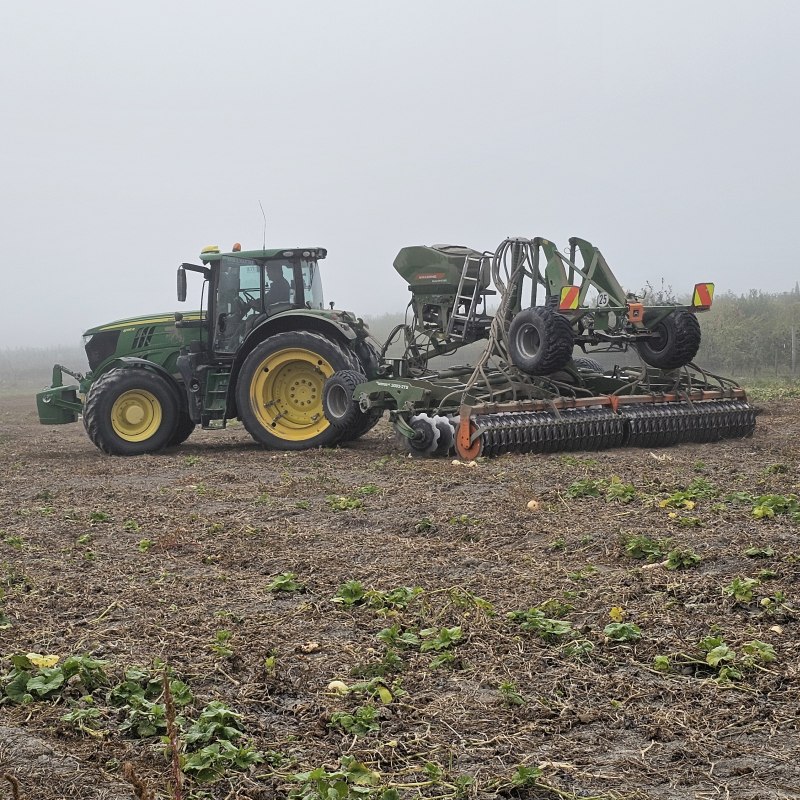
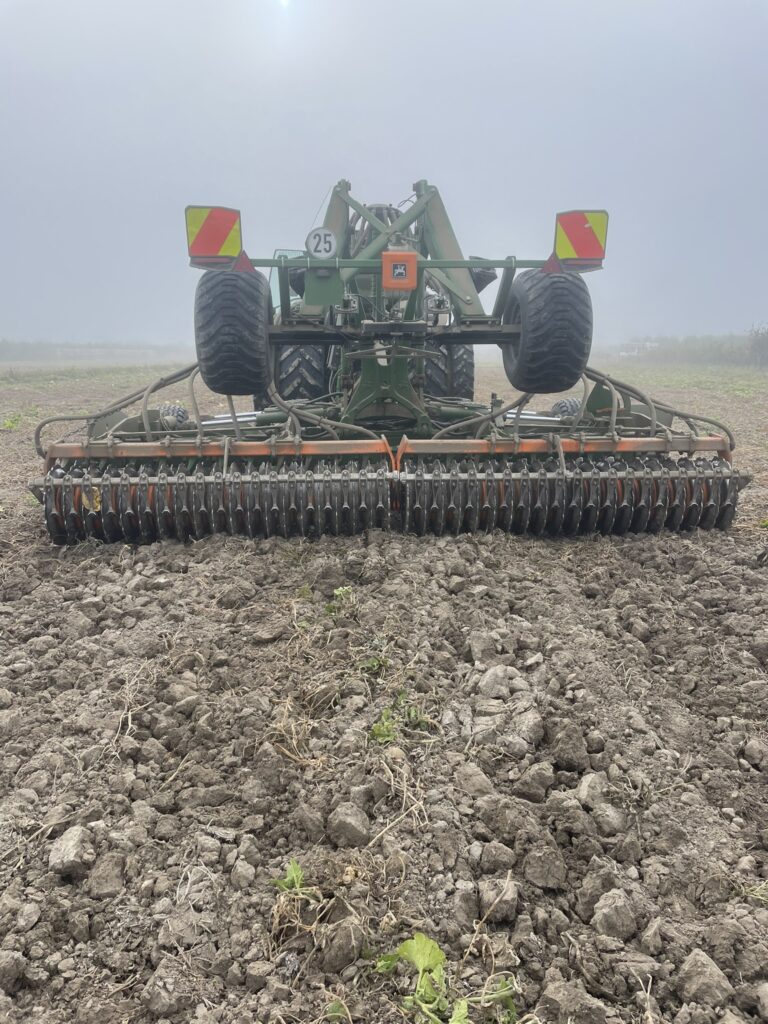
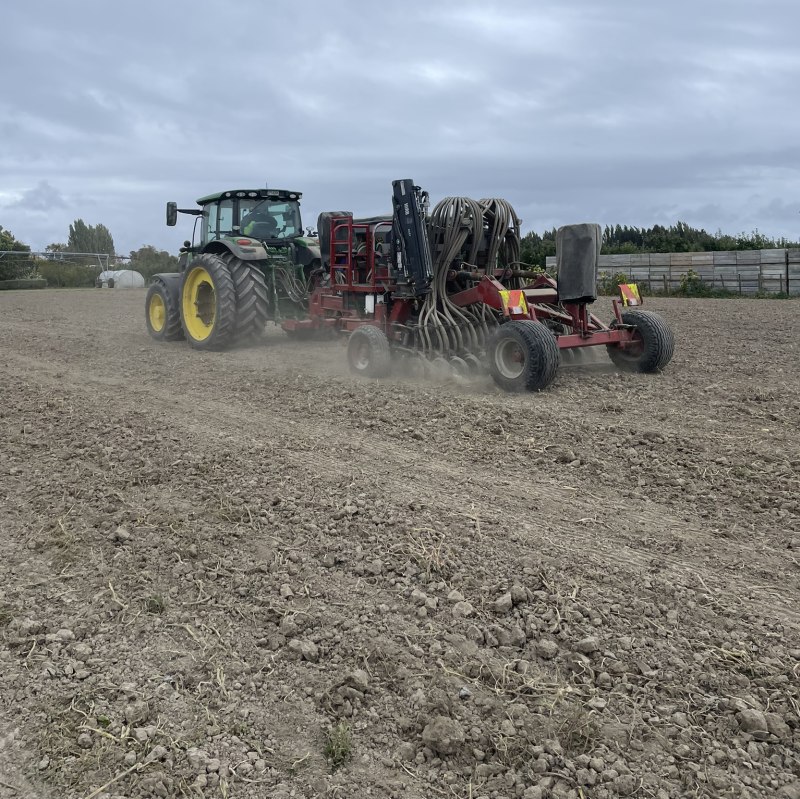
On 26 March, annual ryegrass was sown in both the Conventional and Hybrid plots, and a Triticale/Vetch mix in the Regenerative plots. With very dry, rubbly soil, we irrigated after sowing to help germination.
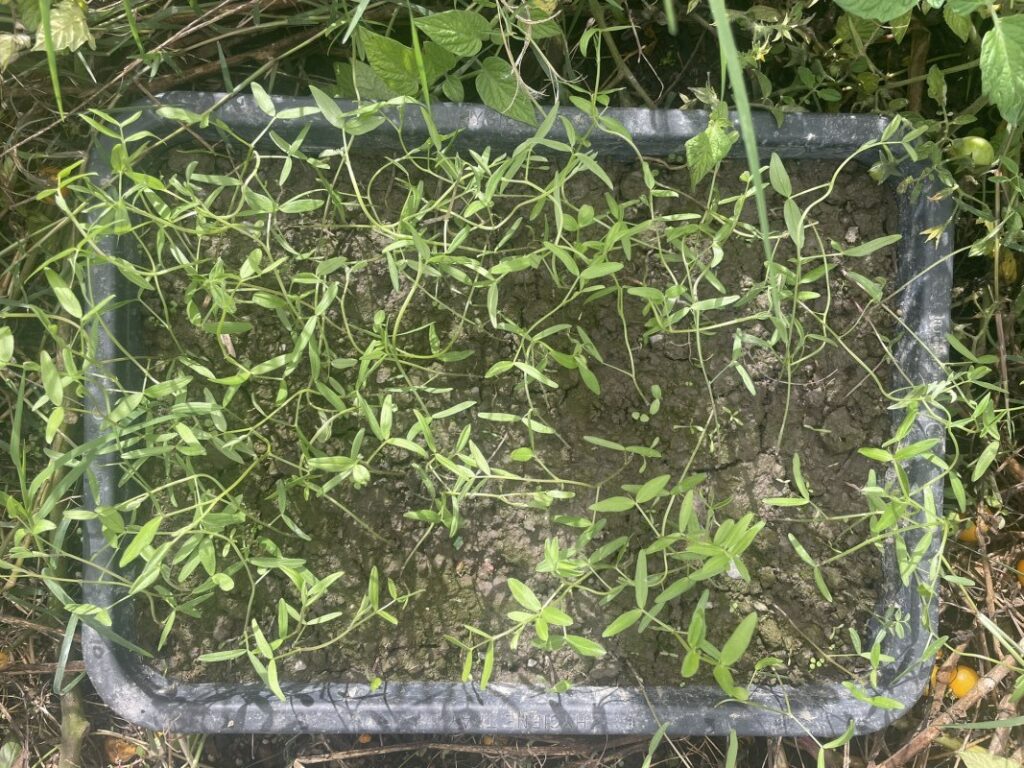
Because we’ve been disappointed by vetch in recent crops, Olivia ran a germination trial, placing 100 seeds in a tray of plot soil and leaving it outside. This showed 88% germination under field conditions, which we were happy about.
Triticale was first to emerge in drilled plots, with significant numbers by 1 April. Ryegrass and vetch were slower, but well underway by 7 April.
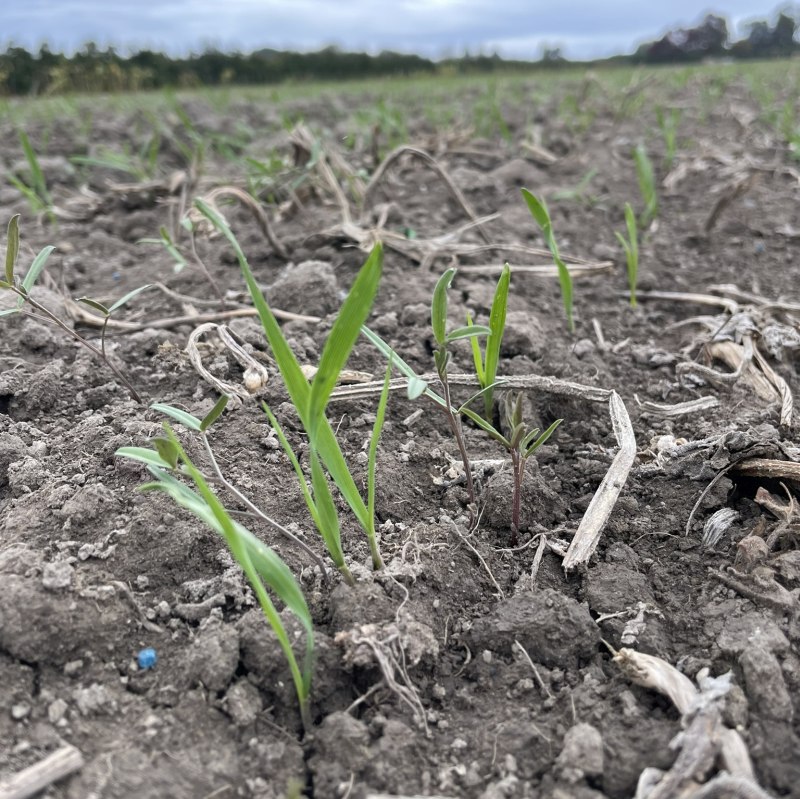
Triticale and Vetch
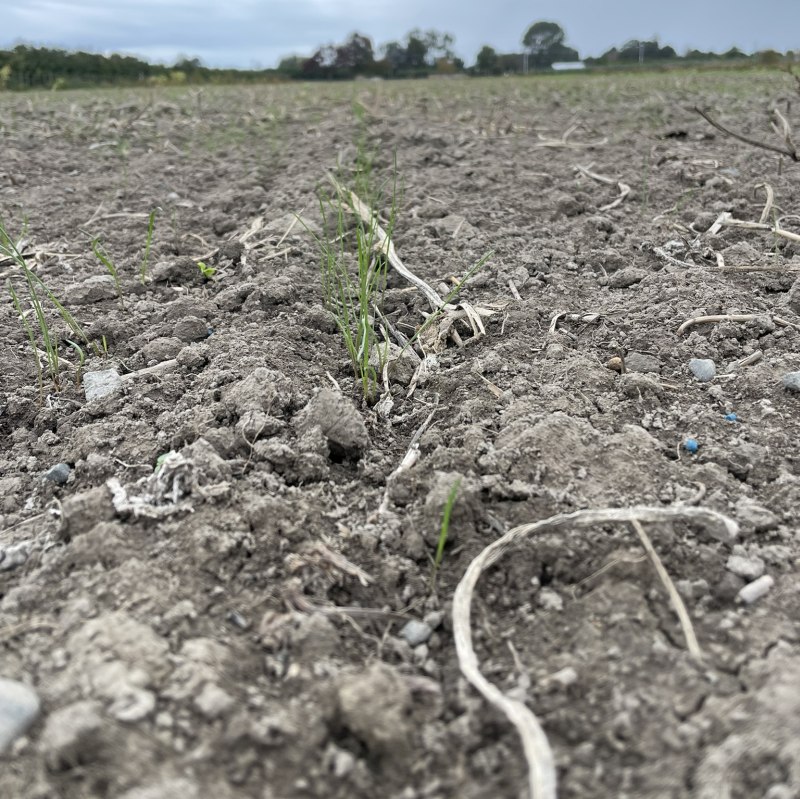
Annual Ryegrass

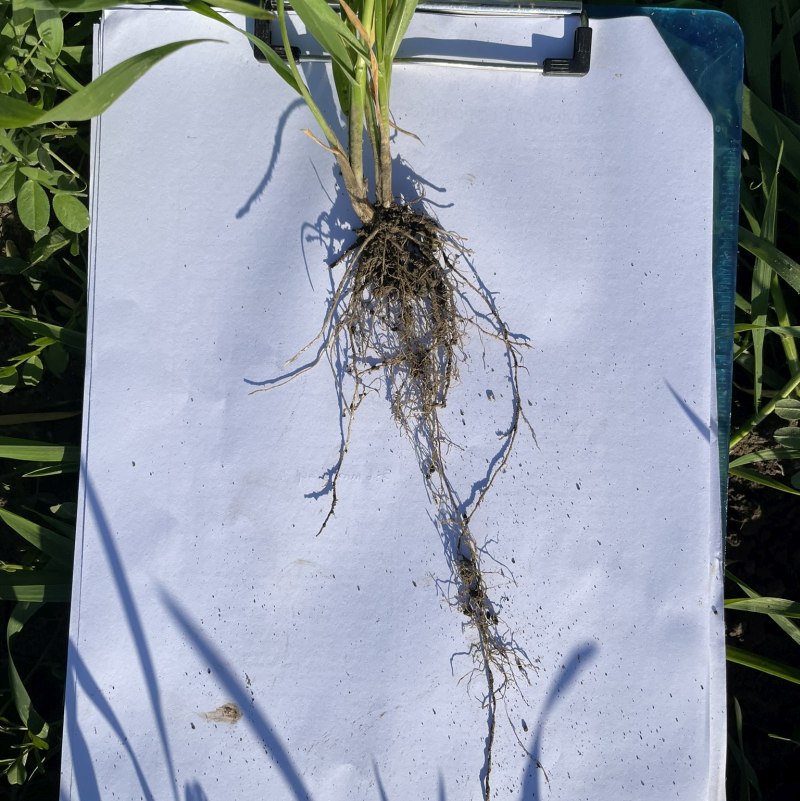
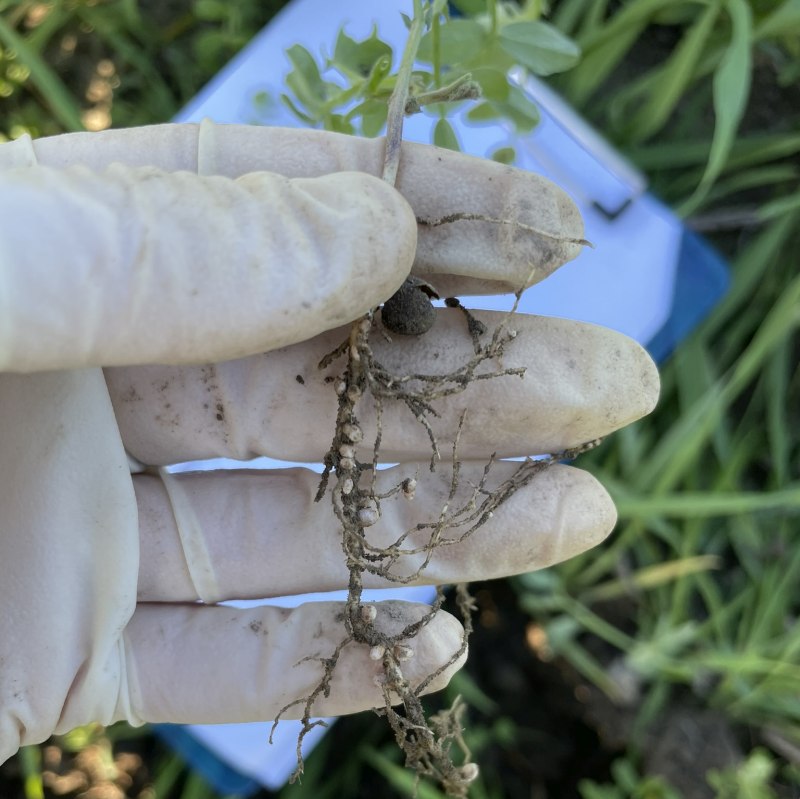
By early May, the triticale was well established with roots down at least 20 cm. The vetch roots were also reaching down and had good nodulation.
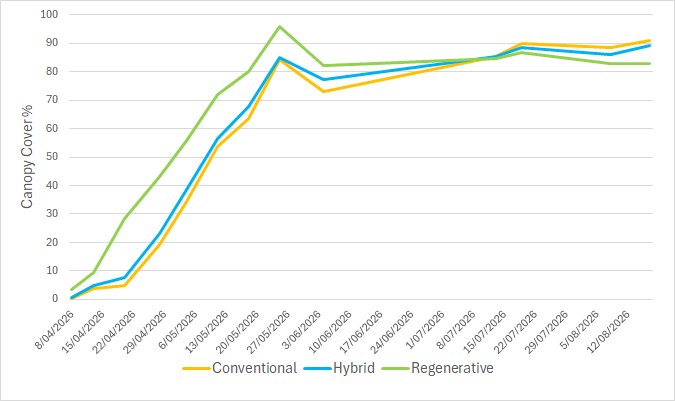
The ground cover under each cover crop is shown in the chart below. After a lag at initial germination, the ryegrass plots grew at the same rate as the triticale and vetch but did not catch up. The drop at the beginning of June followed an attempt to aerate the soil through a full cover crop once the butternut vine had sufficiently rotted. However, there was some crop damage and the average cover dropped. The regenerative triticale and vetch plots did not return to the previous full ground cover. While the triticale was recovering, around mid-July a leaf rust began spreading through the plots. Even as growth in the Conventional and Hybrid ryegrass plots continued lifting in August, the triticale weakened.
Examples of canopy images taken on 17 August show the ground is well covered, although there are more gaps in the Regenerative image and the presence of rust is apparent.

Conventional Annual Ryegrass
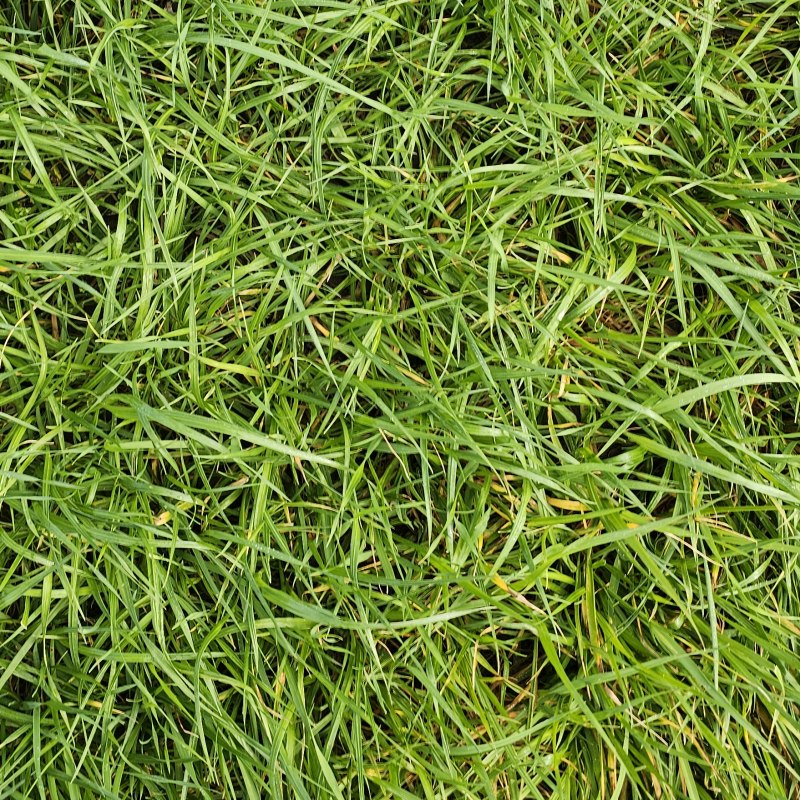
Hybrid Annual Ryegrass
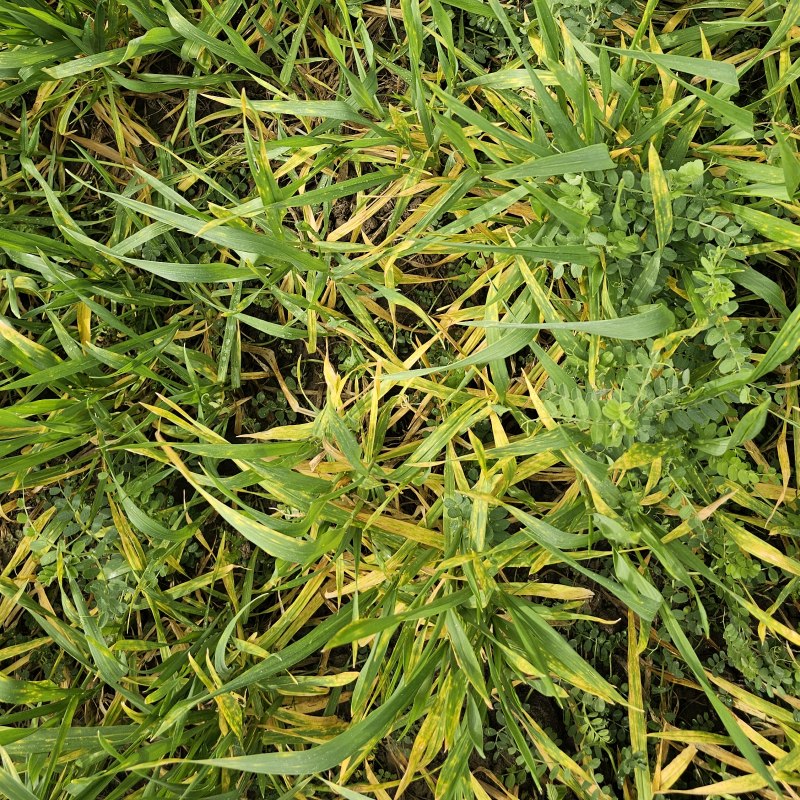
Regenerative Triticale & Vetch

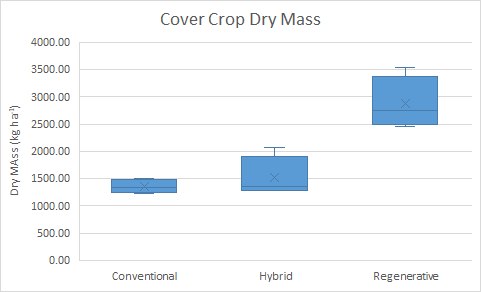
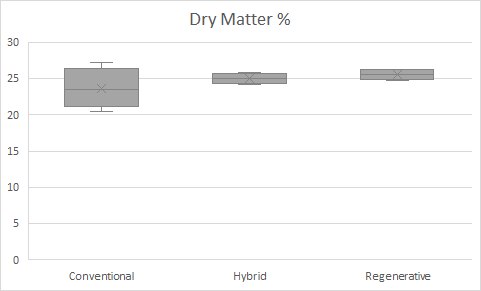
In mid-August we planned to start ground preparation by broadcast spraying the Conventional plots with glyphosate and Torus, and strip-spray the Hybrid and Regenerative plots with glufosinate and Torus. We took above-ground biomass samples on 8 August taking two 0.25 m2 subsamples in each of four sub-plots per plot. The charts below show there is no difference in dry matter percentage between treatments. Despite the lower ground cover in the Regenerative plots as assessed by Canopeo, there is a significant difference in above-ground dry biomass compared to the other two which are the same.
Weather has impacted our plans to spray out the cover crops. Our next summer crop will be food quality maize, and the planting date is flexible so we can delay somewhat. But we do want to get next year’s cover crops in while the autumn is still warm, so we don’t want to wait too long.

We plan a public field walk at the MicroFarm on Carbon Positive Field Walk at 1:00 pm on Wednesday 16 September.

Related

  • Carbon Positive Update
  • 2026 Winter Cover Crops
  • Soil Health for Profit – James Hunter
  • Soil Health for Profit – Charlie White
  • Soil Health for Profit – Josh Wing
  • Soil Health for Profit – Pranoy Pal
  • Soil Health for Profit – Olivia Webster
  • Soil Health for Profit – Dan Bloomer
  • Soil Health for Profit – John Evans
  • Soil Health for Profit – Bill Ritchie
  • Soil Health for Profit – Andy Mawley
  • Soil Health for Profit – Aaron Duncan

RECENT POSTS

  • Carbon Positive Update
  • 2026 Winter Cover Crops
  • Soil Health for Profit – James Hunter
  • Soil Health for Profit – Charlie White
  • Soil Health for Profit – Josh Wing

CATEGORIES

  • Agritech
  • Arable crops
  • Asparagus
  • Conference
  • Courses
  • Cover crops
  • Crop protection
  • Cultivation
  • Events
  • Fresh Vegetables
  • Irrigation
  • Membership
  • Nitrate
  • Nutrition
  • People
  • Permanent crops
  • Pests
  • Process Crops
  • Projects
  • Protected cropping
  • regenerative agriculture
  • Regulations
  • Research
  • soil health
  • Sustainable technology
  • Uncategorized
  • Water resources
  • Weeds
©2023 LandWISE – Promoting sustainable land management

Disclaimer: Any information on the LandWISE website or linked LandWISE resources is of a general nature only. We endeavour to provide accurate and adequate information relating to the subject matters contained in it. It has been prepared and made available to all persons and entities strictly on the basis that LandWISE, its researchers and authors are fully excluded from any liability for damages arising out of any reliance in part or in full upon any of the information for any purpose. No endorsement of named products is intended nor is any criticism of other alternative, but unnamed product.