Skip to content
Menu
LandWISE – Promoting sustainable land management
  • Welcome
    • About
    • LandWISE Committee
    • Contact
  • Projects
    • Carbon Positive
      • Carbon Positive Reports
    • Nitrachek: Farmer Friendly Nitrate Testing
    • SLAKES: a cost-effective measure of soil structural stability
    • Soil Repair after Cyclone Gabrielle
    • Vegetable Production Nitrogen Management
    • Best Management of Nitrates in Process Cropping
    • Future Proofing Vegetable Production
    • Herbicide Resistance Management
  • Events
    • Cyclone Gabrielle Research Symposium
      • Historical North Island Flood Events
      • An extraordinary storm: the severity of Cyclone Gabrielle’s weather in Hawke’s Bay
      • The Science Response in the Year of Storms; A Gisborne/Tairawhiti perspective
      • Insights into causes of landslides triggered by Cyclone Gabrielle
      • The effects of Cyclone Gabrielle on fruit tree health in Hawke’s Bay
      • Impact of Cyclone Gabrielle on stonefruit orchards in Hawke’s Bay: a case study
      • Charting the Course following Cyclone Gabrielle
      • Baseline sediment sampling in Tairawhiti and Hawke’s Bay
      • Impacts on cropping businesses
      • Understanding the flooding caused by Cyclone Gabrielle
      • Building Flood Damage from Ex-Tropical Cyclone Gabrielle
      • Food safety and critical incidents: A unified approach for safer produce
      • Silt nutritional status and contamination concerns
      • Lessons from the horticultural sector response to Cyclone Gabrielle
      • Ecological impacts of Cyclone Gabrielle
      • Cyclone Gabrielle and Poplar Windthrow in Northland
      • Seed Size and Establishment Method Determine Crop Recovery Following Cyclone-Induced Silt Deposition
      • Returning to (some) baseline sampling sites to assess cropping soil recovery
      • Recovery of annual cropping ground – Grower learnings
      • Recovery of Annual Cropping over 2 Years
      • Technical and extension learnings from Cyclone Gabrielle
    • Getting to Carbon Positive!
      • Getting to Carbon Positive – Presenters
    • Rebuilding Our Soils
      • Rebuilding Our Soils – Presenters
    • Events Archive
  • Tools
    • Nitrachek Calculator
    • Carbon Calculator
    • Nutrient Budget
    • Irrigation Evaluation – IRRIG8
      • IRRIG8: Centre Pivot
        • IRRIG8-online: Centre Pivot User Guide
      • IRRIG8: Linear Move
      • IRRIG8: Travelling Irrigator
        • IRRIG8-online: Travelling Irrigation User Guide
      • IRRIG8: Multiple sprayline calculator
      • IRRIG8: Solid set irrigation
      • IRRIG8: Pressure and energy
        • Pressure and Energy Calculator: User Guide
    • ANOVA Tool for statistical significance
    • Fertspread Spreader Calibration
    • Fertspread Placement Calibration
    • Soil Infiltration Calculator
      • Disc Permeameter User Guide
      • Disc Permeameter Calculator: Frequently Asked Questions
  • Blog
  • Sign Up
  • Login
  • Members Only
    • Online Learning
  • Account
  • Site Search
LandWISE – Promoting sustainable land management

Electrification

Posted on April 27, 2025

Why are we dedicating half a day to electrification at LandWISE 2025?

Part of the answer, of course, is in the conference title – “Getting to Carbon Positive”. If we want to get our emissions to zero, we need to stop using fossil fuels. But that is only part of it as Uttam Singh Floray, Community Lead at Electrify Hawke’s Bay will explain.

Solar electricity is now the cheapest form of energy and it is getting cheaper. The cost to generate a kWh ranges from about 4c from a farm-scale system to perhaps 12c for a home system. If you generate it on-site, there are virtually no transmission losses. If you have excess, you can store some to use when the sun isn’t shining. Or you can sell it and have another income stream. Or both. The price you get depends on the agreement you reach and possibly on spot-prices.

In “Unlocking the potential of farm solar and storage”, Rewiring Aotearoa reports that a Federated Farmers’ survey of 1,000 farmers showed that 70% of respondents would consider installing solar panels and the enthusiasm was evenly spread across different age groups, genders and farm types. Going electric is a clear win on the numbers, both at home and on the farm, but it can be complicated in practice. Our keynote speaker, Rewiring Aotearoa CEO Mike Casey from Forest Lodge Orchard, is well versed in all this.
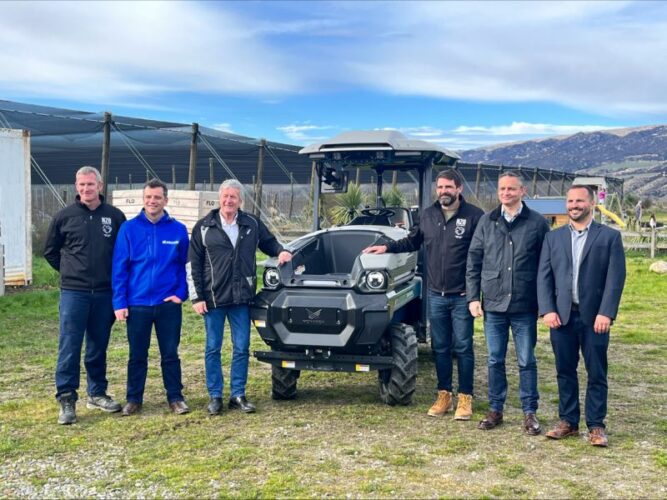
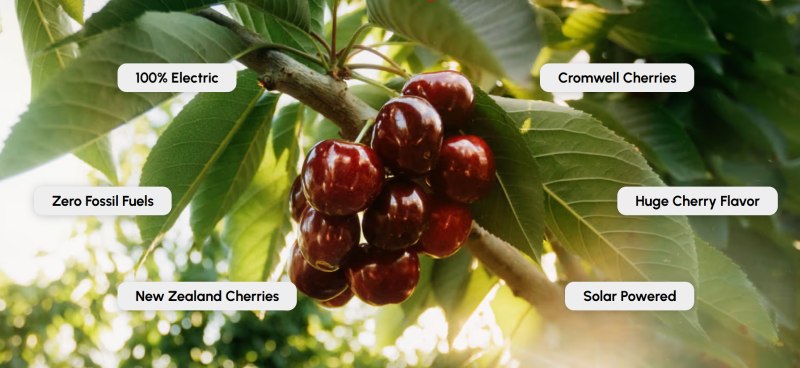
Monarch electric tractor at the Cherry Orchard (C) Forest Lodge

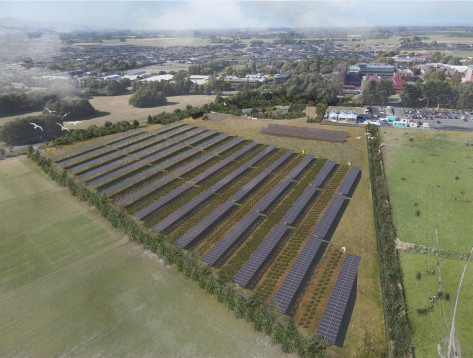
Lincoln University is establishing an electric research farm, a 1.5 MW solar installation that will comprise around 2800 photovoltaic (PV) panels, generating about 2.3 GWh of renewable energy per year. This will be described by Pieter-Willem Hendriks.

Another farmer with personal experience they are willing to share is Becks Smith. With her farm already set up, she now engaged in “Farmers supporting energy solutions on farm”.

One of the main issues facing those wanting to install solar at present is navigating the legal processes and regulatory requirements. Hopefully this will be quickly simplified, but electrical, building, resource management and utility requirements must all be met. Another is sizing the optimum system and allowing for future needs. We will use the MicroFarm solar system as a case study with Freenergy’s Aaron Duncan leading us through the various options modelled for economic optimisation, and the process of ticking boxes so our excess can be exported.
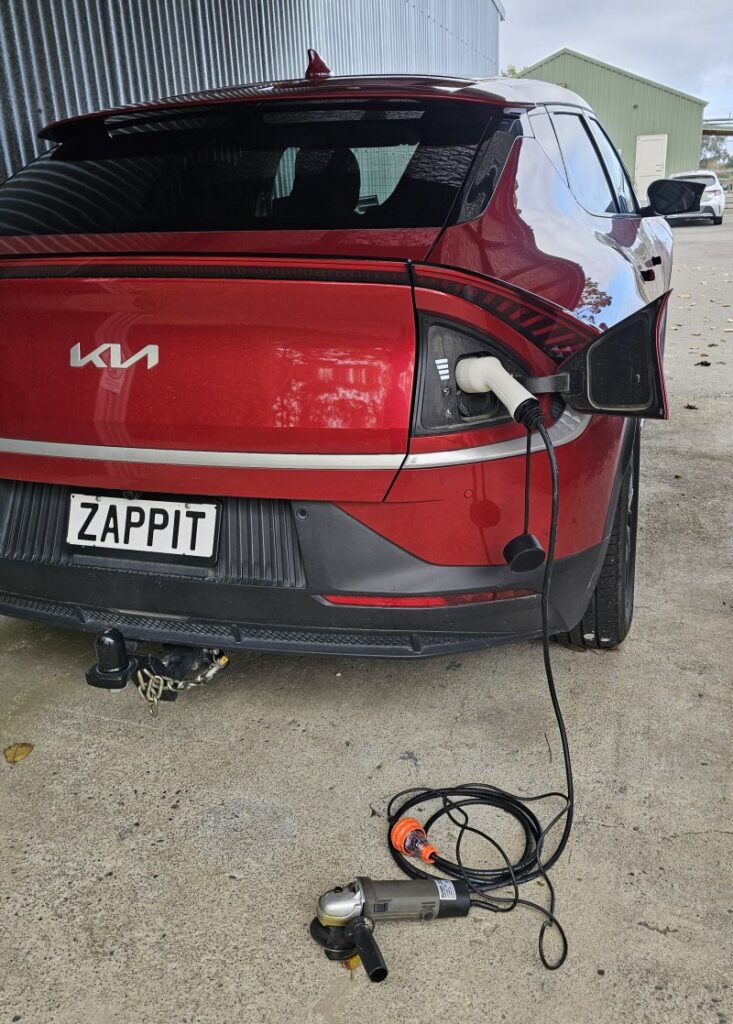
As someone who has driven a fully electric car for well over two years, I’m well aware of the questions I get most frequently. They are about range (I can get over 500km on a charge, weather and terrain depending), charging times (technically 350 km in 18 minutes on a fast charger or 50 km/h at home), cost of electricity (~12c/km on the most expensive charger, 0c/km at home), towing ability (my car has an 1,800 kg braked rating), and do I like it (YES!)

In Cyclone Gabrielle we plugged key home essentials – fridge, internet, electric jug – into extension cords from the car’s 230V vehicle to load (V2L) plugs. After about four days we had barely dropped the battery reserve.

Is it a 4WD ute suitable for hard farm work? (No)

But there are electric and hybrid ute options now. Some, like my car, have built-in 230V power outlets, very handy for using power tools a long way from home.

It might be a while before all farm machinery has electric options. In the meantime, it is possible to transplant an electric motor and power-pack into internal combustion engine (ICE) machines. You can see an example master-minded for Mountain Bike Rotorua by Ra Cleave from Ripple Tech. And because it isn’t just solar that enables on-farm electricity generation, Boyn Benton will outline some of the micro-hydro options available too.

We are setting up some physical displays at the Horizons Regional Council Field Session, so come along and learn about options for farm or home, car or machine, and whether electricity could be another income stream. And cut costs, emissions and your footprint at the same time.
  • Cyclone Gabrielle Research Symposium
  • Biodiversity Strips Update
  • Carbon Positive: Butternuts
  • Carbon Positive: Butternut Planting to Side Dressing
  • Nitrate Levels on the MicroFarm
  • Cyclone Gabrielle Research Symposium
  • Introducing Carys Luke, our Summer Intern
  • Soil Infiltration Calculator
  • MicroFarm Biodiversity Update
  • Irrigation System Testing
  • Carbon Positive: Butternut Planting
  • NZARM Conference 2025

RECENT POSTS

  • Cyclone Gabrielle Research Symposium
  • Biodiversity Strips Update
  • Carbon Positive: Butternuts
  • Carbon Positive: Butternut Planting to Side Dressing
  • Nitrate Levels on the MicroFarm

CATEGORIES

  • Agritech
  • Asparagus
  • Conference
  • Courses
  • Cover crops
  • Cultivation
  • Events
  • Fresh Vegetables
  • Irrigation
  • Membership
  • Nitrate
  • Nutrition
  • People
  • Permanent crops
  • Pests
  • Process Crops
  • Projects
  • Protected cropping
  • regenerative agriculture
  • Regulations
  • Research
  • soil health
  • Sustainable technology
  • Uncategorized
  • Water resources
  • Weeds
©2023 LandWISE – Promoting sustainable land management

Disclaimer: Any information on the LandWISE website or linked LandWISE resources is of a general nature only. We endeavour to provide accurate and adequate information relating to the subject matters contained in it. It has been prepared and made available to all persons and entities strictly on the basis that LandWISE, its researchers and authors are fully excluded from any liability for damages arising out of any reliance in part or in full upon any of the information for any purpose. No endorsement of named products is intended nor is any criticism of other alternative, but unnamed product.