Moblie insectaries
In 2024, mobile insectary pods were set up to provide a source of shelter, nectar, alternative hosts and pollen (SNAP) for beneficial insects. This was done by using the ‘how to’ guide from A Lighter Touch and with support from Olivia Prouse.
The four pods have five native plants each, made up of a combination of Leptinella ‘Flatts black’, Pimelea mimosa, Pimelea prostrata, Parahebe cattaractae, Pimelea xenica, Libertia peregrinans, Leptinella diocia, Muehlenbeckia ephedroides, Carex comans, Muehlenbekia axillaris, Dianella haematica, Coprosma acerosa ‘Hawera’, and Acaena inermis ‘purpurea’.
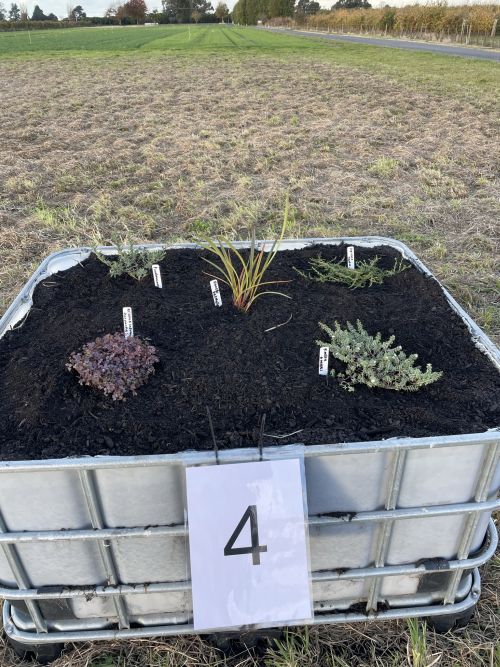
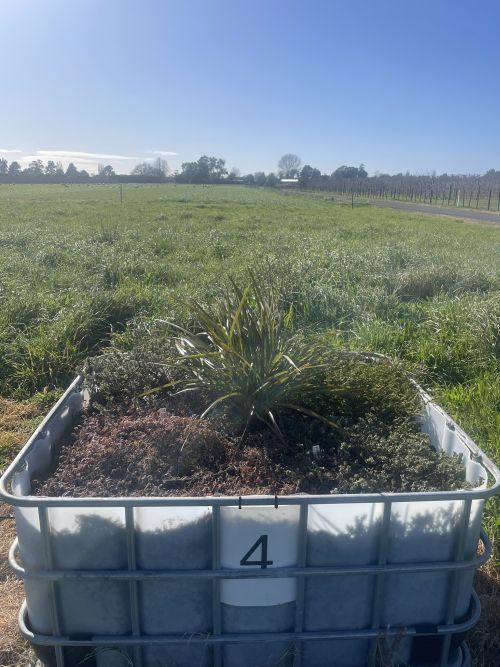
We’ve faced a few challenges with the pods drying out, as they weren’t designed to be self-wicking. Although the pods did dry out, most of the plant species are drought-tolerant and have survived. Each pod has dripline irrigation, which we’ve been running for around two hours a day to maintain moisture levels throughout the dry weather. We also removed the plants and topped the pods up with soil collected from the paddock, as the compost had sunk within the pod.
Annual flower strip
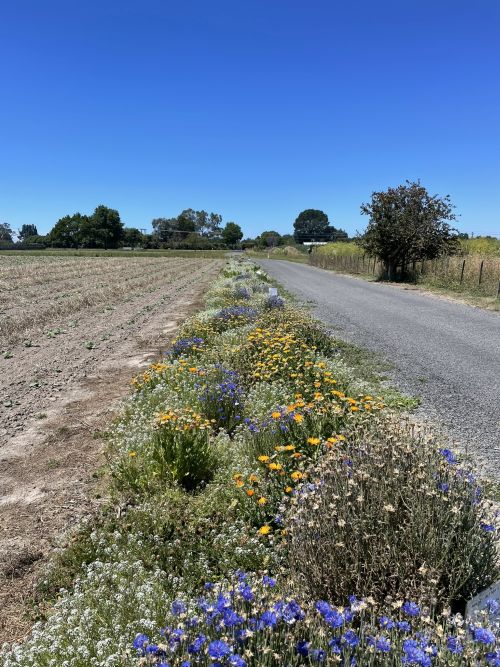
In 2024, we planted 18 different mixes of annual flower strips alongside the Carbon Positive trial area. We observed the different plots to see which species flowered and persisted through the winter. Alyssum, calendula, and cornflowers remained through most of the winter, and once it started warming up, buckwheat started to reappear.
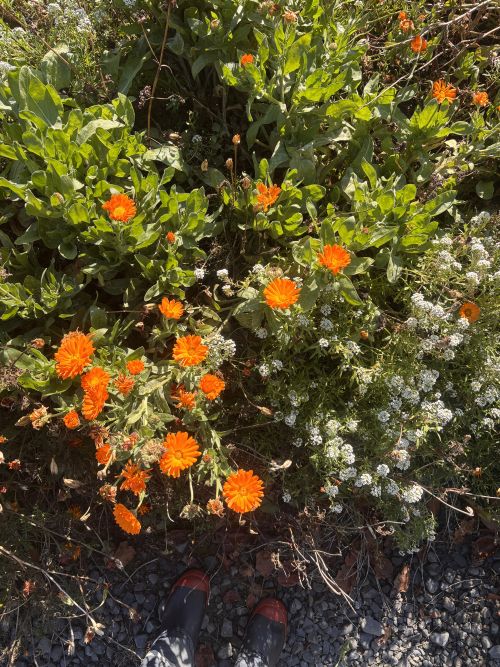
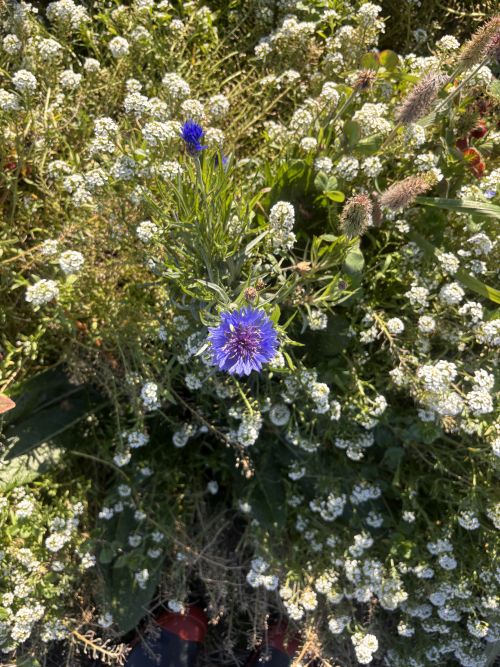
Once we saw the number of beneficial insects, such as bees, small wasps, and flies living in the strip, we knew we wanted to increase the area of our annual flower strips. We decided to plant our fenceline with the annual flower strip mix used by A Lighter Touch: alyssum, buckwheat, calendula, cornflower, and marigolds. We also added in a few sunflowers. These flower species were ones that established well in our 2024 annual flower strip, and most of them have returned this summer from last year’s seed. The new annual flower strip was planted at the start of December, and the Buckwheat and sunflowers are already establishing well.
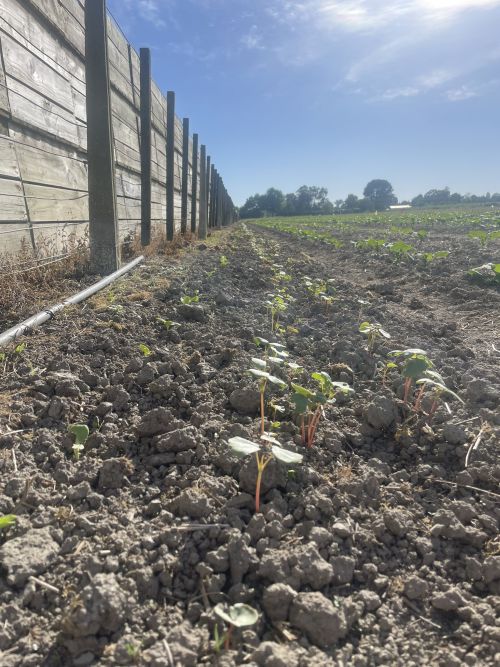
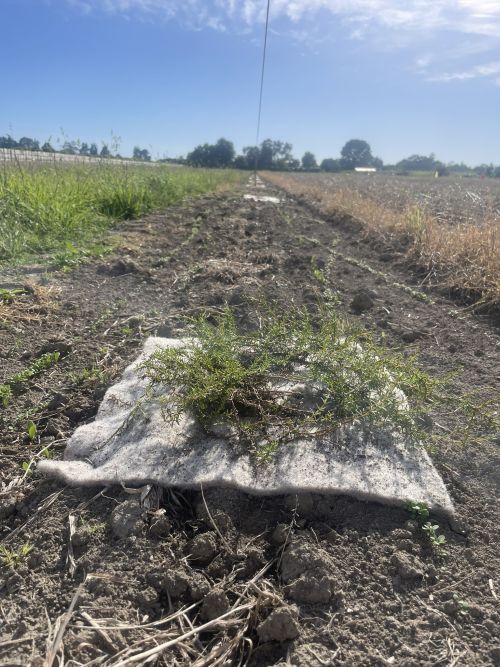
We also decided to plant native ground covers under our irrigator cable every 5 meters, in the hope that they will eventually suppress the weeds, and we will no longer need to spray or mow under it. We chose four low-growing species that have been successful in our pods: Leptinella ‘Flatts black’, Pimelea, Leptinella diocia, and Coprosma acerosa ‘Hawera’. We planted rows of annual flowers alongside the native ground covers to provide temporary cover until the native plants grow large enough to cover the ground. We also hope the native ground covers will spread under the annual flower strip, as we’ve noticed, especially with the Leptinella, that they like to grow beneath other plants in the pods.
For background information, read: Biodiversity at the MicroFarm