
Lessons for the management of highly productive land
Two years after Cyclone Gabrielle devastated the Hawke’s Bay and Tairawhiti regions, what have we learned about recovery?
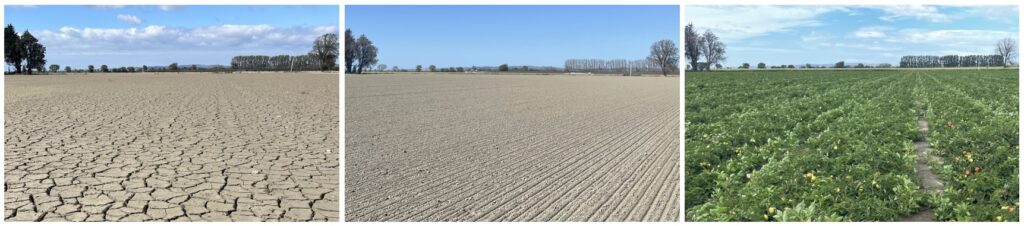
Cyclone Gabrielle struck New Zealand in February 2023, causing widespread flooding that affected Hawke’s Bay, Gisborne/Tairawhiti, and Northland. In Hawke’s Bay and Tairawhiti, Cyclone Gabrielle was characterised by the enormous amount of sediment that was deposited on some of the county’s most highly productive land.
It was an extraordinarily difficult year characterised not by a single catastrophic event but by cumulative impacts from severe storms and several additional weather events including Cyclone Hale in January, Cyclone Gabrielle and Son of Gabrielle in February, and others that followed particularly in the Wairoa and Tairawhiti areas.
In November 2025, we co-hosted with FAR and Vegetable Research and Innovation, a symposium for researchers to share and compare findings from studies of Cyclone Gabrielle and recovery. Around 60 people gathered in Havelock North for two days. Thank you to all the organisations that sponsored the symposium, allowing it to be run with no fees for the participants.
A great deal of semi-coordinated activity followed in the wake of Cyclone Gabrielle. However, there was much incomplete work that would add value by helping enrich our understanding of the longer-term effects of different management responses in different scenarios. The symposium brought together those who investigated Cyclone Gabrielle’s impacts on highly productive land. They presented and discussed findings and observations to draw out lessons to aid land managers and policy makers in future events.
Among the questions were:
- What are the lessons to pass on to those impacted by future events?
- What are the lessons for policy makers?
- What are the economic outcomes from different approaches?
- How have sites responded to different management of cropping soils, given different sediment types and depths?
- How have sites responded to the removal of sediment and any subsequent soil amelioration efforts?
- Have permanent crops responded differently to different approaches applied in similar scenarios?
- Are all soils recovering quickly? Will they return to previous productivity levels?
Twenty presentations covered historic storm events of note, the weather conditions before and during the cyclone, geological influences, immediate responses, food safety, and longer-term trials seeking to understand how best to return high value land to best production. We thank all the presenters for telling their stories, and all delegates for their contributions to the discussion.
At the end of the symposium, Dirk Wallace led a feedback session in which all delegates responded to a set of questions:
- What elements aided recovery and what lessons can inform policy and sector planning?
- What surprises and challenges emerged during recovery?
- What key takeaways should guide future preparedness?
- What information is still missing?
Across questions, several themes consistently emerged.
- Communication and collaboration were identified as critically important.
- Data and research surfaced as both a strength and a challenge.
- Infrastructure and preparedness were recurring concerns.
- On the technical front, soil and crop recovery exceeded expectations, with yields rebounding faster than anticipated.
- Finally, human and social dimensions were central to recovery success. Mental health support, patience, and direct communication with experienced peers were repeatedly stressed.
Participants agreed on several priority actions:
- Establish a central information hub with regional portals to provide consistent, accessible guidance and data.
- Commission targeted research on rainfall patterns, soil microbiology, contamination risks, and crop-specific recovery timelines, delivered in decision-ready formats.
- Strengthen pre-event coordination through drills, contact lists, and local decision-making authority, alongside investment in backup infrastructure.
- Embed human-first supports, including mental health services, peer advisory panels, and tailored financial relief for vulnerable growers.
- Integrate disaster risk reduction and nature-based solutions (e.g., wetlands, “room for rivers”) into long-term land-use planning.
The symposium captured invaluable knowledge that will help communities and policymakers prepare for and respond to future events. Visit the Cyclone Gabrielle Research Symposium page to access all presentations, with videos coming soon.
Thanks everyone! Sally Anderson, Dirk Wallace and Dan Bloomer – Symposium Convenors