
Skip to content
Menu
LandWISE – Promoting sustainable land management
  • Welcome
    • About
    • LandWISE Committee
    • Contact
  • Projects
    • Carbon Positive
      • Carbon Positive Reports
    • Nitrachek: Farmer Friendly Nitrate Testing
    • SLAKES: a cost-effective measure of soil structural stability
    • Soil Repair after Cyclone Gabrielle
    • Vegetable Production Nitrogen Management
    • Best Management of Nitrates in Process Cropping
    • Future Proofing Vegetable Production
    • Herbicide Resistance Management
  • Events
    • Cyclone Gabrielle Research Symposium
      • Historical North Island Flood Events
      • An extraordinary storm: the severity of Cyclone Gabrielle’s weather in Hawke’s Bay
      • The Science Response in the Year of Storms; A Gisborne/Tairawhiti perspective
      • Insights into causes of landslides triggered by Cyclone Gabrielle
      • The effects of Cyclone Gabrielle on fruit tree health in Hawke’s Bay
      • Impact of Cyclone Gabrielle on stonefruit orchards in Hawke’s Bay: a case study
      • Charting the Course following Cyclone Gabrielle
      • Baseline sediment sampling in Tairawhiti and Hawke’s Bay
      • Impacts on cropping businesses
      • Understanding the flooding caused by Cyclone Gabrielle
      • Building Flood Damage from Ex-Tropical Cyclone Gabrielle
      • Food safety and critical incidents: A unified approach for safer produce
      • Silt nutritional status and contamination concerns
      • Lessons from the horticultural sector response to Cyclone Gabrielle
      • Ecological impacts of Cyclone Gabrielle
      • Cyclone Gabrielle and Poplar Windthrow in Northland
      • Seed Size and Establishment Method Determine Crop Recovery Following Cyclone-Induced Silt Deposition
      • Returning to (some) baseline sampling sites to assess cropping soil recovery
      • Recovery of annual cropping ground – Grower learnings
      • Recovery of Annual Cropping over 2 Years
      • Technical and extension learnings from Cyclone Gabrielle
    • Getting to Carbon Positive!
      • Getting to Carbon Positive – Presenters
    • Rebuilding Our Soils
      • Rebuilding Our Soils – Presenters
    • Events Archive
  • Tools
    • Nitrachek Calculator
    • Carbon Calculator
    • Nutrient Budget
    • Irrigation Evaluation – IRRIG8
      • IRRIG8: Centre Pivot
        • IRRIG8-online: Centre Pivot User Guide
      • IRRIG8: Linear Move
      • IRRIG8: Travelling Irrigator
        • IRRIG8-online: Travelling Irrigation User Guide
      • IRRIG8: Multiple sprayline calculator
      • IRRIG8: Solid set irrigation
      • IRRIG8: Pressure and energy
        • Pressure and Energy Calculator: User Guide
    • ANOVA Tool for statistical significance
    • Fertspread Spreader Calibration
    • Fertspread Placement Calibration
    • Soil Infiltration Calculator
      • Disc Permeameter User Guide
      • Disc Permeameter Calculator: Frequently Asked Questions
  • Blog
  • Sign Up
  • Login
  • Members Only
    • Online Learning
  • Account
  • Site Search
LandWISE – Promoting sustainable land management

Managing our footprint

Posted on April 29, 2025

LandWISE 2025 Getting to Carbon Positive

Doing what we can to reduce our greenhouse gas emissions is not about meeting regulations, it is about meeting the expectations of our markets and others in our supply chains (and ourselves and the planet!). Most large companies must report on their own emissions and those of their suppliers and clients. We are part of their emissions profiles, and they want us to do our part.

What is it all about? What emissions are we talking about? Who is implementing changes to lower their impact? How do we start?
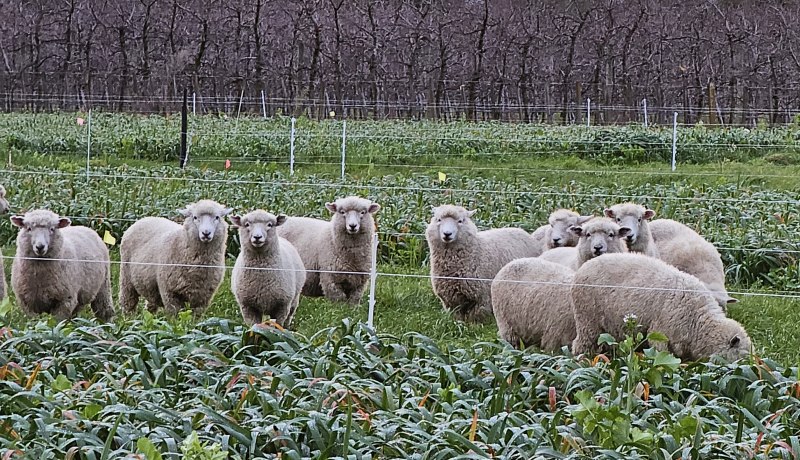
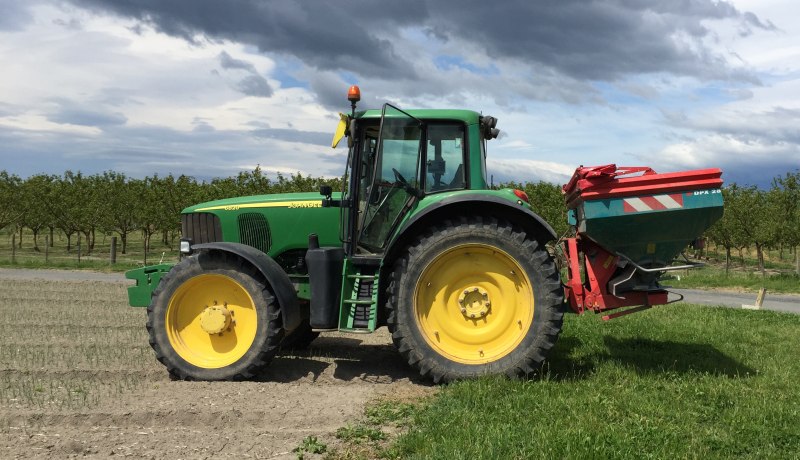
At LandWISE 2025: Getting to Carbon Positive, you’ll get these answers and more. You’ll hear and see examples, and hear that people are reaping benefits, because it isn’t all about adding costs, it can save money. And in another session, you’ll hear how it can even provide an alternative income stream.

The Greenhouse Gas (GHG) Protocol applies the measurement of emissions across three scopes. These are Scope 1, which includes the direct emissions from sources that the organisation owns or controls, such as fuel use for farm-owned vehicles, natural gas used for heating buildings and greenhouses, fertilizer use, leaks in refrigeration and cooling processes, as well as emissions from soil management. Scope 2 includes indirect emissions from purchased energy. Scope 3 includes all other indirect emissions in the organisation’s value chain, such as emissions from freight/transportation of products, business travel, waste, and emissions from purchased goods and services.

Pii-Tuulia Nikula (PhD)
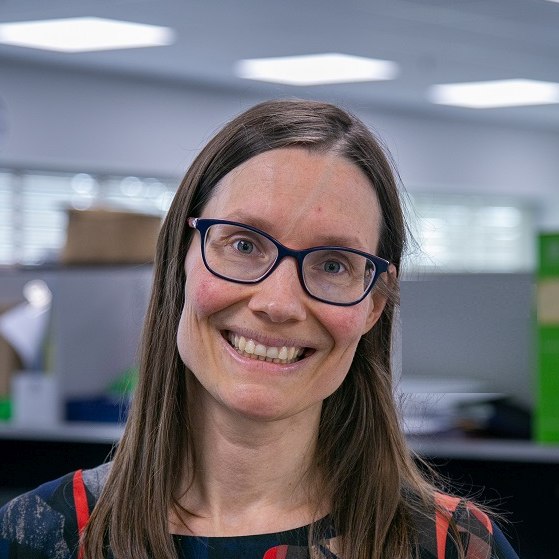
Greenhouse Gas Accounting: Scopes Solutions Target Setting

Pii-Tuulia Nikula is an Associate Professor in the School of Business at the Eastern Institute of Technology (Hawke’s Bay), where she teaches courses on Sustainable Organisations and Research Methods. Her research has explored emission trajectories and climate disclosures of New Zealand businesses. Pii-Tuulia will cover key questions that apply to the application of the GHG Protocol, such as common issues and challenges with data collection and practical solutions available for emissions reduction across all three scopes. Finally, she will discuss how organisations can use their emissions baseline to start thinking about their emissions reduction targets. 

Uttam Singh Floray

Reporting for primary producers, processors and exporters

Uttam Singh Floray is a seasoned Sustainability Consultant with extensive expertise in Environmental, Social, and Governance (ESG) frameworks, carbon accounting, and compliance solutions. As Team Lead – Account management (Government) at Toitū Envirocare, he has headed the implementation of the Carbon Neutral Government Programme and guided organisations toward achieving emissions compliance and sustainable development goals. Uttam has a lead role with Electrify Hawke’s Bay, a regional Rewiring Aotearoa group promoting adoption of low carbon alternative energy sources.

Ron McFetridge

Minimising emissions at WaterForce

One of three founders, Ron McFetridge is the Managing Director at WaterForce. Established in 2002, WaterForce has operations throughout New Zealand, with a large concentration on the South Island, and about 250 staff. Ron is working to reduce the emissions footprint of the company through careful management of energy including establishing rooftop solar and electrifying the vehicle fleet. He is speaking about the process, seeking suitable equipment and changing culture in an organisation.

Dan Bloomer (PhD)

Carbon Positive progress – relative footprints

Dan Bloomer is the LandWISE Manager and an independent consultant. He brings a diverse set of interests and extensive experience in field trials and extension to his role overseeing the LandWISE research portfolio. Together with Olivia Webster, he will present a study comparing the emissions from the three farm systems that form the Carbon Positive trial. What are the main drivers of emissions in an intensive process cropping scenraio?

Of course, knowing our emissions is only a starting point. We also want to know how we can minimise them. And that is the subject of the Electrification and Alternative energy case studies sessions!
Programme
Registration
Tickets
  • Cyclone Gabrielle Research Symposium
  • Biodiversity Strips Update
  • Carbon Positive: Butternuts
  • Carbon Positive: Butternut Planting to Side Dressing
  • Nitrate Levels on the MicroFarm
  • Cyclone Gabrielle Research Symposium
  • Introducing Carys Luke, our Summer Intern
  • Soil Infiltration Calculator
  • MicroFarm Biodiversity Update
  • Irrigation System Testing
  • Carbon Positive: Butternut Planting
  • NZARM Conference 2025

RECENT POSTS

  • Cyclone Gabrielle Research Symposium
  • Biodiversity Strips Update
  • Carbon Positive: Butternuts
  • Carbon Positive: Butternut Planting to Side Dressing
  • Nitrate Levels on the MicroFarm

CATEGORIES

  • Agritech
  • Asparagus
  • Conference
  • Courses
  • Cover crops
  • Cultivation
  • Events
  • Fresh Vegetables
  • Irrigation
  • Membership
  • Nitrate
  • Nutrition
  • People
  • Permanent crops
  • Pests
  • Process Crops
  • Projects
  • Protected cropping
  • regenerative agriculture
  • Regulations
  • Research
  • soil health
  • Sustainable technology
  • Uncategorized
  • Water resources
  • Weeds
©2023 LandWISE – Promoting sustainable land management

Disclaimer: Any information on the LandWISE website or linked LandWISE resources is of a general nature only. We endeavour to provide accurate and adequate information relating to the subject matters contained in it. It has been prepared and made available to all persons and entities strictly on the basis that LandWISE, its researchers and authors are fully excluded from any liability for damages arising out of any reliance in part or in full upon any of the information for any purpose. No endorsement of named products is intended nor is any criticism of other alternative, but unnamed product.