
Skip to content
Menu
LandWISE – Promoting sustainable land management
  • Welcome
    • About
    • LandWISE Committee and Staff
    • Contact
  • Projects
    • Carbon Positive
      • Carbon Positive Reports
    • Nitrachek: Farmer Friendly Nitrate Testing
    • SLAKES: a cost-effective measure of soil structural stability
    • Soil Repair after Cyclone Gabrielle
    • Vegetable Production Nitrogen Management
    • Best Management of Nitrates in Process Cropping
    • Future Proofing Vegetable Production
    • Herbicide Resistance Management
  • Events
    • Soil Health for Profit
      • Soil Health for Profit Presenters
        • What makes a farm “regenerative”?
        • Soil and Plant Nutrition at Harvest Moon
        • Regenerative agriculture principles in Kiwifruit production
        • Carbon Positive: Applying Regenerative Principles to Intensive Process Vegetable Production 2025-2026
        • Carbon Positive: making sense of carbon data
        • A Career in Cropping ? building soil
        • Cyclone Gabrielle Research Symposium: Lessons for the management of highly productive land
        • Cyclone Recovery: Turning sediment to soil
        • Cascading impacts of Cyclone Gabrielle ? and why soil health is business resilience
        • Lessons Learned from 20 Years of Cover Crop and Soil Health Research and Extension
        • Technologies at Harvest Moon
        • Do all nitrogenamendmentshave the same footprint?
        • Answers Under Foot: Should Soil Health Be Our #1 Sustainability Goal?
        • Going way back: LandWISE?s History of Minimum Tillage
        • Crop Stacking: The best practice of tomorrow
        • Long-term evaluation of tillage systems for maize silage in New Zealand
        • Minimising Tillage at Ludlow Farms
        • Long-Term Maize Establishment andCover Crop Research in the Waikato
        • Minimum tillage discussion panel
    • Cyclone Gabrielle Research Symposium
    • Getting to Carbon Positive!
      • Getting to Carbon Positive – Presenters
    • Rebuilding Our Soils
      • Rebuilding Our Soils – Presenters
    • Events Archive
  • Tools
    • Fertiliser Application Equipment Calibration
      • Fertspread Spreader Calibration
      • Fertspread Placement Calibration
    • Nitrachek Calculator
    • Irrigation Evaluation – IRRIG8
      • IRRIG8: Centre Pivot Calibration
      • IRRIG8: Centre Pivot Evaluation
      • IRRIG8: Linear Move Calibration
      • IRRIG8: Linear Move Evaluation
      • IRRIG8: Solid Set Calibration
      • IRRIG8: Solid set irrigation evaluation
      • IRRIG8: Travelling Irrigator Calibration
      • IRRIG8: Travelling Irrigation Evaluation
      • IRRIG8: Sprayline calibration
      • IRRIG8: Sprayline Evaluation
      • IRRIG8: Drip Micro Calibration
      • IRRIG8: Drip Micro Evaluation
      • IRRIG8: Pressure and energy
    • Soil Infiltration Calculator
      • Disc Permeameter User Guide
      • Disc Permeameter Calculator: Frequently Asked Questions
    • Carbon Calculator
    • ANOVA Tool for statistical significance
  • Blog
  • Sign Up
  • Login
  • Members Only
    • Online Learning
  • Account
  • Site Search
LandWISE – Promoting sustainable land management

Pesky Pūkeko versus Maize Carbon Positive Trial

Posted on November 16, 2026

The 2026 maize crop, part of the Carbon Positive Trial, emerged well. We are comparing three growing systems: Conventional, Hybrid and Regenerative. Maize is at a healthy V6 stage, with the plants awaiting side dressing. However, within each plot we have been observing pūkeko damage. Pūkeko have sliced or pulled plants from the ground and are leaving evidence of their sport behind, as shown in the images below. There was no noticable damage from Argentine Stem Weevil or Greasy Cutworm in any treatment. There was a little bit of rabbit browsing.
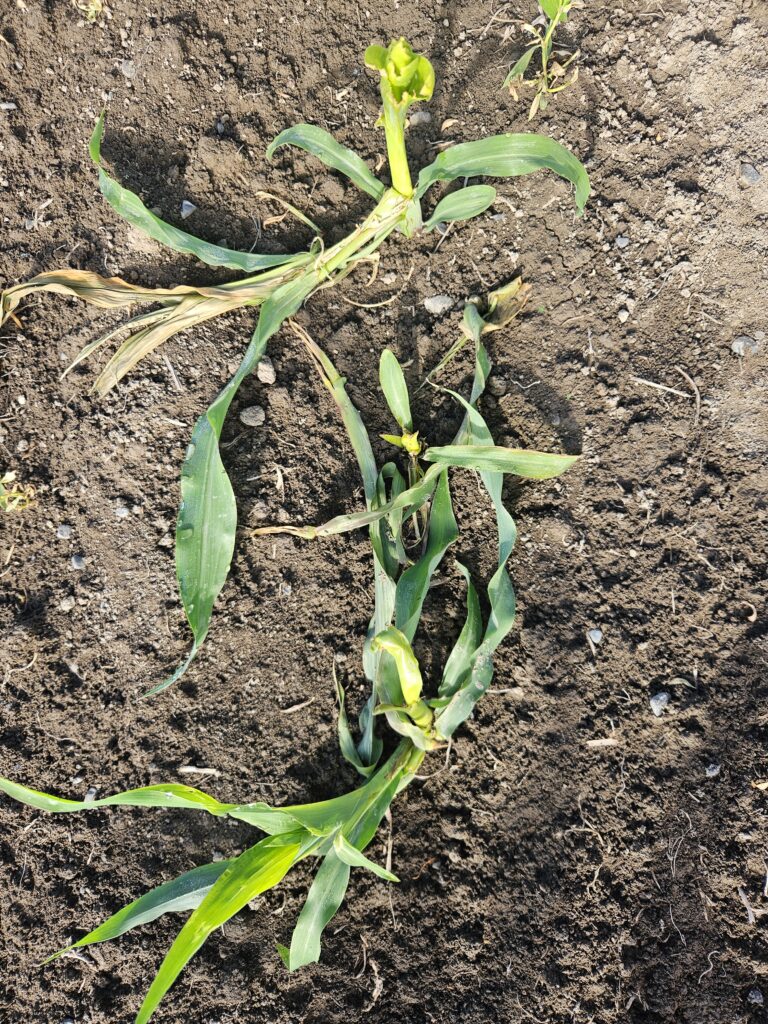
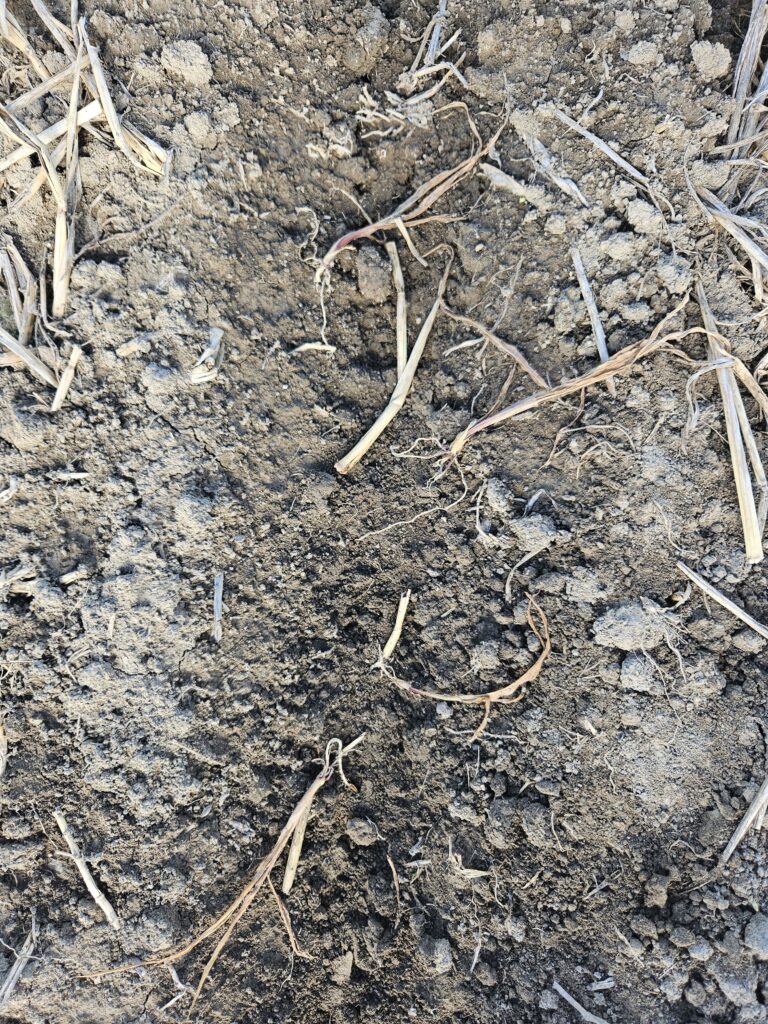
Pukeko Damge
Pūkeko sliced plants
Pūkeko pulled plants

We recorded damage to the maize plants to see whether pūkeko had a notable preference between treatments. There are 4 x 90m long plots of each treatment, meaning 12 plots in total, each with 16 rows. Using a measuring wheel, we recorded the metres of maize missing and analysed how the areas are affected.

As shown in the graph below, some plots are affected more so than others. Comparing the treatments, Regenerative plots are targeted more than the Conventional or Hybrid.
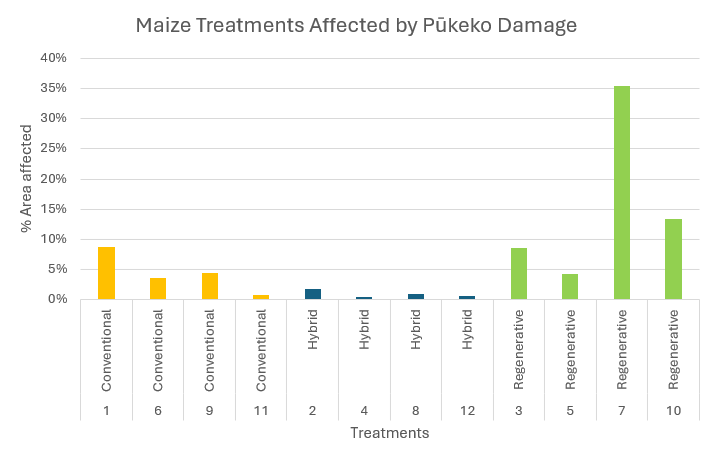
Pūkeko damage, by plot

The pūkeko selected rows or patches to pull out plants. Our measurements of each row varied, with some rows targeted as displayed in the image below.
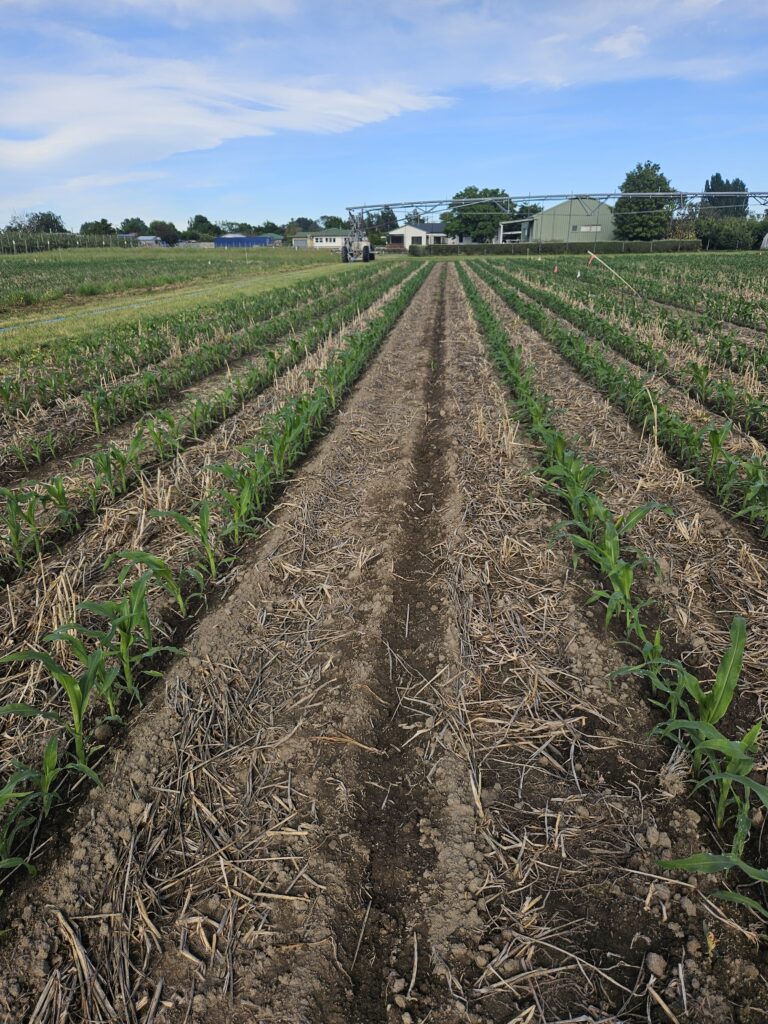
Missing Maize Row

Other field observations were that the perimeters of sites are more affected than the centres.

Does this mean that pūkeko have a preference for treatment groups? The Regenerative treatment has the most damage per area. We wonder whether this is due to using untreated seed compared to the Conventional and Hybrid seed, which had a bird repellent.

Measuring the plant damage has been valuable, as we know the extent of the damage and can take these areas into account when collecting data to get a fair representation.

Keep an eye out for more updates on the Maize Carbon Positive Trial.

Related

Leave a Reply Cancel reply

Your email address will not be published. Required fields are marked *

  • Pesky Pūkeko versus Maize Carbon Positive Trial
  • Electrify Hawke’s Bay EXPO
  • Carbon Positive Update
  • 2026 Winter Cover Crops
  • 2026 – Food Quality Maize
  • Soil Health for Profit – James Hunter
  • Soil Health for Profit – Charlie White
  • Soil Health for Profit – Josh Wing
  • Soil Health for Profit – Pranoy Pal
  • Soil Health for Profit – Olivia Webster
  • Soil Health for Profit – Dan Bloomer
  • Soil Health for Profit – John Evans

RECENT POSTS

  • Pesky Pūkeko versus Maize Carbon Positive Trial
  • Electrify Hawke’s Bay EXPO
  • Carbon Positive Update
  • 2026 Winter Cover Crops
  • 2026 – Food Quality Maize

CATEGORIES

  • Agritech
  • Arable crops
  • Asparagus
  • Conference
  • Courses
  • Cover crops
  • Crop protection
  • Cultivation
  • Events
  • Fresh Vegetables
  • Irrigation
  • Membership
  • Nitrate
  • Nutrition
  • People
  • Permanent crops
  • Pests
  • Process Crops
  • Projects
  • Protected cropping
  • regenerative agriculture
  • Regulations
  • Research
  • soil health
  • Sustainable technology
  • Uncategorized
  • Water resources
  • Weeds
©2023 LandWISE – Promoting sustainable land management

Disclaimer: Any information on the LandWISE website or linked LandWISE resources is of a general nature only. We endeavour to provide accurate and adequate information relating to the subject matters contained in it. It has been prepared and made available to all persons and entities strictly on the basis that LandWISE, its researchers and authors are fully excluded from any liability for damages arising out of any reliance in part or in full upon any of the information for any purpose. No endorsement of named products is intended nor is any criticism of other alternative, but unnamed product.