
In our Carbon Positive trial, tomatoes were grown in 2023 and will be grown again in 2027.
In 2023, groundwork for tomatoes was done by Wattie’s strip-till machine; a rotary hoe that only works up the plant line. Used on wet soil in the Hybrid treatment, which had been sprayed out 6 weeks before planting, the machine caused considerable soil smearing and other damage. In 2027, we propose using an Orthman-style strip-till machine to reduce the soil impact, but we need to know if the tomatoes will establish well in strip-tilled soil.
In 2023, we planned to use a Mulch-tech planter to plant tomatoes in the Regenerative treatment into a mulch layer created by a 12-ton cover crop. The cover crop was still growing right up until planting, and, as a result, the soil was too dry to plant into with the Mulch-Tech planter. Instead, the cover crop was incorporated into the soil. In 2027, we want to use the Mulch-Tech planter to plant tomatoes, but before then, we want to get an idea of the weed suppression the mulch layer will provide.
To determine if tomatoes can establish in strip-tilled soil and how much weed suppression a mulch layer will provide, we have a small trial comparing tomato establishment under full cultivation with Orthman strip tillage, and comparing a mulch cover on strip-tilled ground with conventional herbicide applications for weed control.
The three different treatments are repeated four times in 10 m by 2 m plots. Each treatment has the same plant population, fertiliser, and crop management programme with the exception that the mulch treatment did not get soil-applied herbicide. The crop can be irrigated as required.
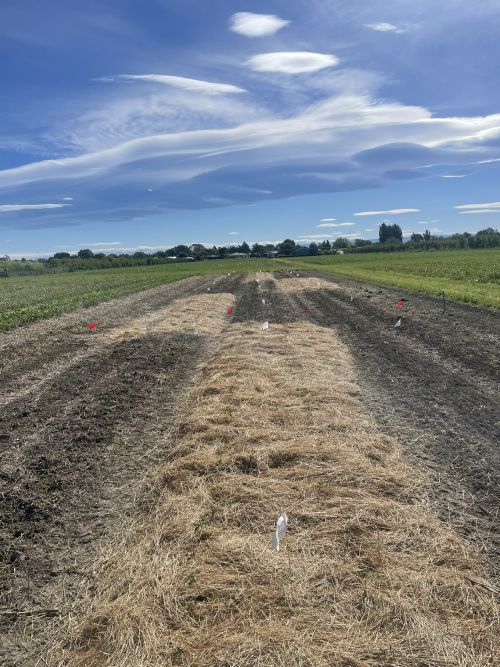
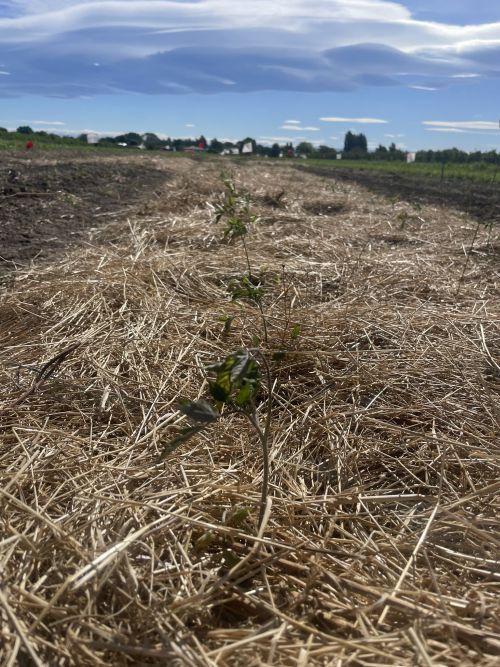
All three treatments were sprayed out at the same time. The full cultivation treatment was rotary-hoed and rolled. The strip tillage and strip tillage with mulch treatments were cultivated with an Orthman strip-till. We spread 300 kg/ha of Complex along the plant line and incorporated it 3 days before planting. The cultivated and strip-tilled treatments were sprayed with Boxer Gold pre-emergent herbicide, whereas the mulch treatment received Biostart N and Mycorrin. Two days later, all the tomatoes were planted by hand in twin rows 75cm apart.
Pūkeko and rabbits started to damage the seedlings, so we have covered them with insect netting. They will all remain under the netting until the tomatoes have established.
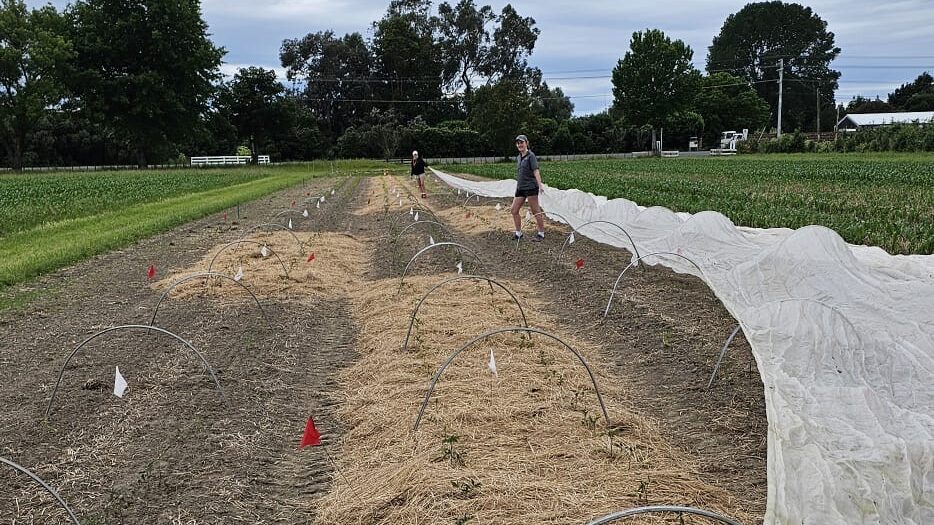
Thank you to Rob Nichol for providing us with the hay and to Scott Lawson for the netting and hoops.