
To get an idea of how far the maize roots have penetrated into the soil, we dug up an average-looking plant from each of the three treatments. The aim was to carefully excavate a 20 × 20 cm cube of soil around each plant, allowing us to lift out the root system and see how deep the roots had grown.
Hybrid
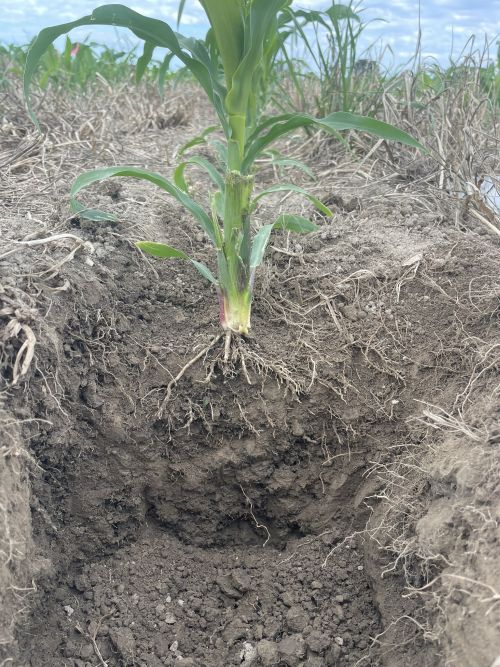
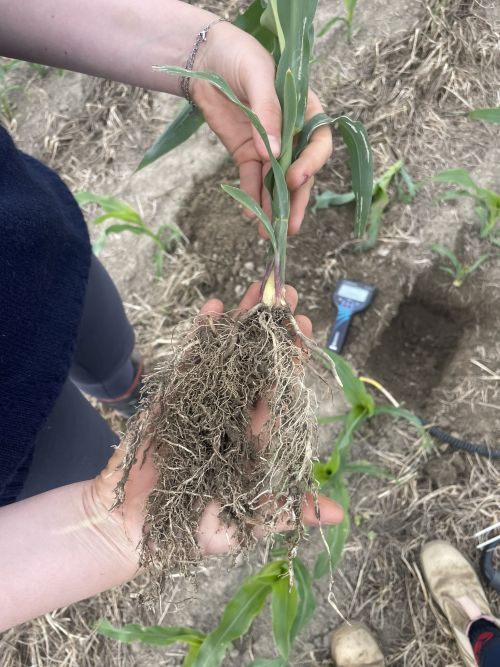
In the Hybrid treatment, we successfully lifted out a cube of soil and could see a good fibrous root system developing. The soil was slightly drier than in the Conventional and Regenerative treatments, but the roots appeared to be establishing well.
Regenerative
The Regenerative treatment showed a similar result to the Hybrid, with a good root system extending beyond 20 cm into the soil. The soil had good moisture and was relatively crumbly.
Conventional
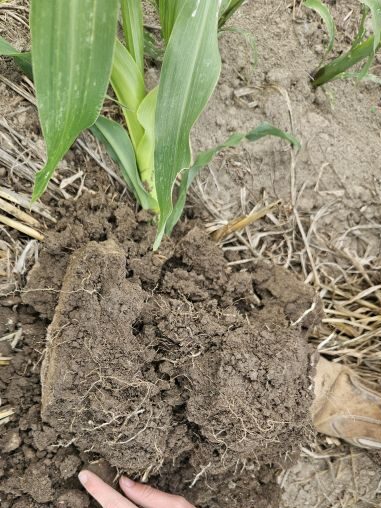
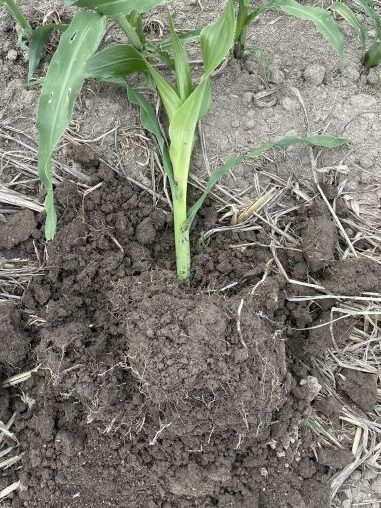
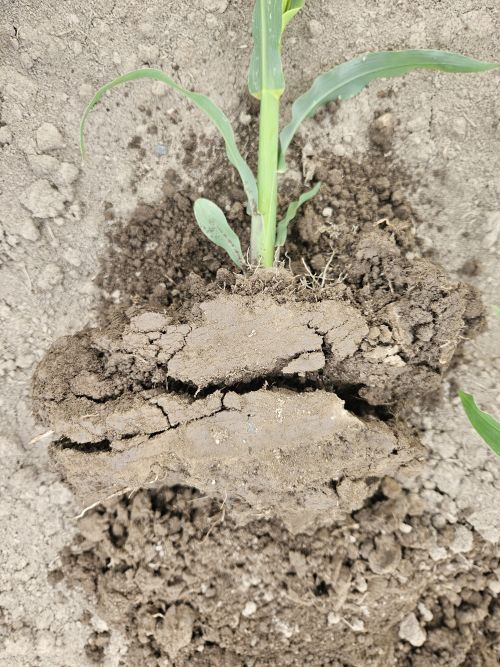
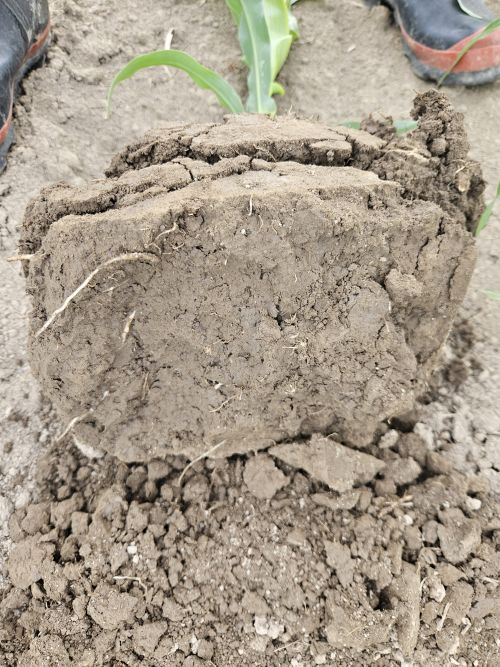
The Conventional treatment was noticeably harder to dig, with a compacted layer (hardpan) at approximately 12 cm. This layer appears to have formed following disc ripping and subsequent power harrowing.
When excavating the plant, we could only dig down to 12 cm before the spade was unable to penetrate further. As a result, we could only lift out a much shallower section of soil compared with the other two treatments.
It was also evident that the maize roots were struggling to penetrate the hardpan, with many appearing to grow sideways rather than down through the soil profile.
What’s happening beneath the surface?
To get a better understanding of soil compaction across the three treatments, we plan to carry out penetrometer measurements soon. This will help identify where compaction is occurring and if the plants roots will be able to penetrate through it.